
(Updated 2023)

Chhatrapati Shivaji Terminus, crossroads of the past and the future
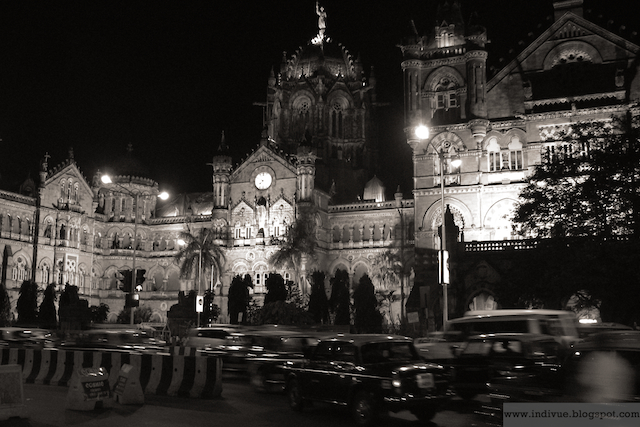
In the bustling heart of Mumbai, as the cloak of night descended upon the city, the Chhatrapati Shivaji Terminus stood like a grand sentinel at the threshold of time. It was a warm evening in 2006, and the historic railway station, a marquee of Victorian Gothic architecture, was bathed in the soft glow of its ornate street lamps. The golden light carved out the intricate details of its façades and turrets against the darkening sky, a testament to a bygone era’s architectural prowess.
Even at this late hour, the terminal was a hive of activity. Commuters, just specks from a distance, scurried across its grand portals, some racing to catch the last local train, others just arriving from distant parts of the country, each carrying stories in the folds of their weary eyes. The air was thick with the scent of fried samosas from nearby vendors, blending with the distant sound of honking taxis and the perpetual rhythm of the city.
Taxi drivers, lined up in their iconic black and yellow cabs, called out to weary travelers, offering rides to every corner of Mumbai. Their engines idled, ready to whisk away anyone to places where dreams were both made and lost. The street, a blur of motion, captured the relentless pace of the city that never sleeps.
Above the commotion, the clock tower stood resolute, its hands inching towards midnight. Its ticking was like the heartbeat of Mumbai, steady and reassuring, a reminder that in the city’s relentless march forward, there was a rhythm and order.
This was Mumbai, a city of stark contrasts and enduring spirit, captured in the grandeur of one of its most iconic landmarks. The Chhatrapati Shivaji Terminus, much like the city it served, was a crossroads of the past and the future, a place where every moment held the weight of history and the rush of tomorrow.
The Timeless Elegance of Chhatrapati Shivaji Terminus
Mumbai, the pulsating heart of India, is a city woven from the threads of diversity, history, and relentless ambition. It is here, amidst the urban symphony of sights and sounds, that the Chhatrapati Shivaji Terminus (CST) stands as a resplendent emblem of the city’s colonial past and its modern-day vibrancy.
Architectural Grandeur
Formerly known as Victoria Terminus, this historic railway station is an architectural marvel that has withstood the test of time since its inception in 1887. Designed by the British architect F.W. Stevens, it is an outstanding example of Victorian Gothic Revival architecture, fused with themes derived from Indian traditional architecture. The terminal’s sky-piercing turrets, pointed arches, and detailed stonework are a visual sonnet that pays homage to the craftsmanship of its era.
A UNESCO World Heritage Site
CST is not just the heart of Mumbai’s railway network; it is a UNESCO World Heritage Site that draws tourists, photographers, and historians alike. The designation is a recognition of the station’s historical significance and its role in the nation’s colonial and post-colonial history. The structure serves as a historical document, etched in stone, capturing the economic and social transformations that have swept through India.
The Pulse of Mumbai
The terminal is much more than a railroad hub; it’s the pulse of the city. It sees the daily flow of over three million commuters, reflecting the city’s diversity. Travelers can witness the hustle of daily life in Mumbai here—office-goers dashing for their trains, vendors selling local snacks, and the echoing announcements that guide people through their journeys.
Photographic Muse
For photographers, CST offers an unparalleled canvas. Capturing the play of light on the intricate carvings, the silhouette of the grand structure against the twilight sky, or the motion blur of passengers against the static beauty of the station, the terminal is a muse that inspires.
Gateway to the City
Located in the southern tip of Mumbai, CST is the perfect starting point for any traveler looking to explore the city. It connects to all parts of Mumbai and is a stone’s throw away from other iconic landmarks such as the Gateway of India and the Taj Mahal Palace Hotel.
A Night to Remember
Nighttime bestows a different character upon CST. As the day’s fervor recedes, the station’s facade is lit up, highlighting its architectural nuances and creating a serene aura. This is the moment when CST isn’t just a transit point but a historical monument taking a breath, standing tall amidst the city’s dreams and aspirations.
A Cultural Experience
The area around CST is replete with cultural experiences. From the nearby heritage walk that explores the colonial buildings to the street food vendors that offer Mumbai delicacies, the station is a gateway to the cultural heart of the city.
Visitor’s Note
For those planning to visit, the best time to capture the essence of CST is during the early morning or late evening hours when the crowd is thinner. The station is functional 24/7, with guided tours available for those interested in its history.
Useful links:


 INDIVUE - travel & art
Leave a comment