
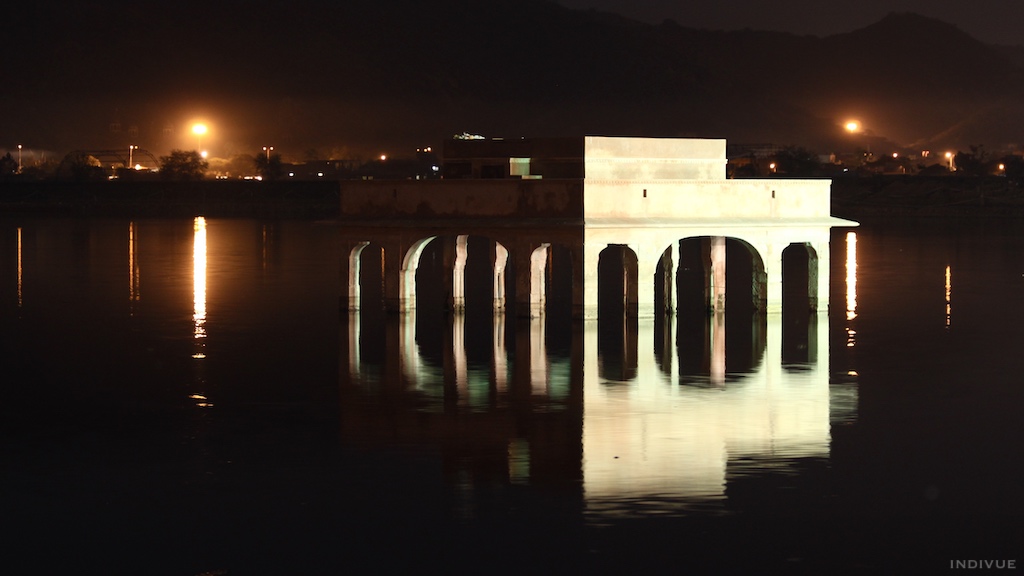
Truth is stranger than fiction and Bollywood can be everywhere, when you travel in India –
I stopped by to photograph this beautiful building, the palace called Jal Mahal in Jaipur, which was surrounded by water, together with its beautiful reflections, and heard fantastic singing echoing from somewhere. You can hear it in this short video, the music playing in the background.
Jaipur and Jal Mahal
Jal Mahal, often referred to as the “Water Palace,” is a striking architectural marvel situated in the heart of Jaipur, the vibrant capital of Rajasthan, India.
Historical Context
Jal Mahal was constructed in the 18th century during the reign of Maharaja Jai Singh II of Amber. This period marked a renaissance in Rajput architecture, with the integration of Mughal and Rajput styles. The palace was initially built as a hunting lodge and summer retreat, taking advantage of the cool breezes across the water of Man Sagar Lake.
Architectural Brilliance
The palace’s design is a testament to the architectural ingenuity of the Rajput era. Jal Mahal appears to be a single story building, but there are four submerged levels under the water. The red sandstone construction reflects a typical blend of Mughal and Rajput styles. Intricate detailing, symmetrical patterns, and the use of vibrant colors are some of the architectural highlights.
The Setting – Man Sagar Lake
Man Sagar Lake, where Jal Mahal is centrally located, was formed by damming the Darbhawati River. The lake, when full, covers an area of about 300 acres and is home to several species of migratory and resident birds, making it a haven for birdwatchers and nature enthusiasts.
Environmental and Restoration Efforts
Extensive restoration and cleanup projects have been undertaken to restore the lake’s ecosystem and the palace’s former glory.
Cultural and Tourist Attraction
Jal Mahal is an iconic tourist attraction in Jaipur, drawing visitors from across the globe. While the interior of the palace is not accessible to the public, the view from the shore is breathtaking, especially at night when the palace is illuminated. See the video attached. Traditional wooden boats are known to offer rides around the lake, providing a closer view of the palace.
Symbolism and Significance
The palace is more than just an architectural marvel; it’s a symbol of the Rajputana aesthetic sense and their love for nature and art. It’s a harmonious blend of Rajasthani culture and the natural beauty of the landscape.
For travel photographers, Jal Mahal presents a captivating subject. The play of light on the water during sunrise and sunset offers a magical backdrop for photography. The palace’s reflection on the calm waters of the lake provides a serene yet majestic image, ideal for capturing the essence of Jaipur’s royal heritage.
Jal Mahal stands as a serene, almost surreal reminder of Jaipur’s royal past. Its elegance and the historical and cultural significance make it a must-visit for anyone traveling to Jaipur. As a piece of living history, it continues to enchant visitors with its beauty and its testament to the architectural prowess of a bygone era.
Useful links:


 INDIVUE - travel & art
Leave a comment