
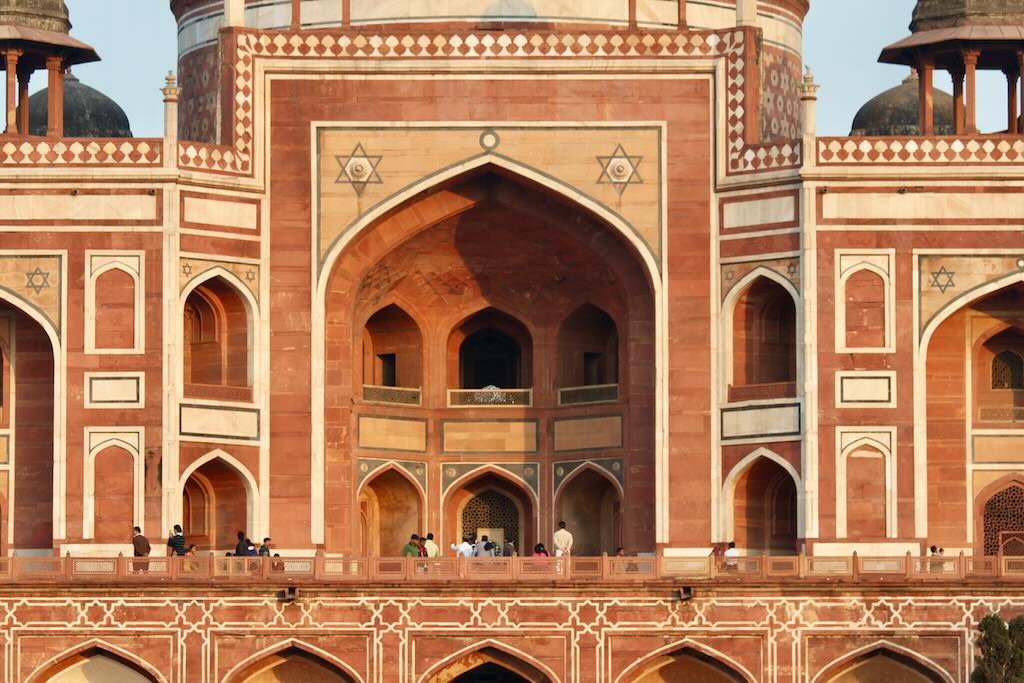
This video takes you to Humayun’s Tomb in New Delhi, India. The video of this famous sightseeing place in New Delhi was filmed ten years ago in January, which is why the sunset looks beautiful and you will see no pollution.
In this video you will get to see Humayun’s Tomb 1565-72 a.d. and Bu Halima Enclosure from 16th century. It is said that “Hamida Banu Begum, Humayun’s grieving widow, built Emperor Humayun’s mausoleum. Precursor to the Taj Mahal, it stands on a platform of 12000m2 and reaches a height of 47m2. The earliest example of Persian influence in Indian architecture, the tomb has within it over 100 graves, earning it the name ‘Dormitory of the Mughals. Built of rubble masonry, the structure is the first to use red sandstone and white marble in such great quantities. The small canopies of the terrace were originally covered in glazed blue tiles.”
Video duration 2:31
Facts of Humayun’s Tomb
The Humayun’s Tomb is one of the best sights in New Delhi, India.
It is an extraordinary monument of immense historical and architectural significance. Built in the 16th century, this mausoleum is one of the most splendid examples of the Mughal architectural legacy and is often regarded as a precursor to the Taj Mahal.
Historical Context
- Commission and Completion: The tomb was commissioned by Humayun’s first wife, Empress Bega Begum (also known as Haji Begum), in 1569-70, and it was completed in 1572.
- Architectural Influence: The tomb’s design was conceived by the Persian architect Mirak Mirza Ghiyas, who introduced Persian architecture to India, setting a precedent for future Mughal architecture.
Architectural Highlights
- Design Elements: The structure is notable for its symmetry, the octagonal shape of the central tomb chamber, and the use of red sandstone and white marble.
- Garden Layout: The tomb is set in the center of a large, quadrilateral Charbagh (a Persian-style garden divided into four parts), a feature that became characteristic of Mughal garden-tombs.
- Innovations: The double-dome structure and the high plinth are architectural innovations that were later seen in many Mughal buildings.
Cultural and Artistic Significance
- UNESCO World Heritage Site: Humayun’s Tomb was declared a UNESCO World Heritage Site in 1993, recognizing its outstanding universal value.
- Influence on Later Monuments: The tomb is considered a significant architectural milestone in the development of the Mughal style, influencing major architectural innovations in the subcontinent.
Conservation and Restoration
- Preservation Efforts: Over the years, the tomb has undergone several restoration and conservation projects to preserve its original magnificence.
- Collaborative Work: These efforts often involve collaborations between the Archaeological Survey of India, various international organizations, and government bodies.
Tourism and Educational Value
- Visitor Experience: The site is a major tourist attraction in Delhi, offering a rich educational experience in Mughal history and architecture.
- Accessibility: It is easily accessible, located near other historical sites in Delhi, and provides an enriching cultural experience for visitors.
Surrounding Monuments
- Additional Structures: The complex also houses several other graves, including those of other members of the Mughal royal family and a mosque.
- Isa Khan’s Tomb: Adjacent to the main tomb, the complex includes the tomb of Isa Khan Niyazi, an Afghan noble, which predates Humayun’s Tomb and is itself an exquisite example of Lodi-era architecture.
See also what Humayun’s Tomb looks like from far
If you liked my video of Human’s Tomb in Delhi, consider subscribing and watching also other videos in my YouTube channel, so that I can make more videos!

Read also my updated travel guide INDIVUE – Trip to India of which this video is also a part of!
Other useful links:



 INDIVUE - travel & art
Leave a comment