
Barcelona in Spain is one of Europe’s most captivating destinations – a city where history, architecture, beach life and vibrant urban culture come together in a truly unique way. The capital of Catalonia is especially famous for Antoni Gaudí’s masterpieces, its lively atmosphere, and colorful street life that leaves a lasting impression on every visitor. In this article I highlight the essential sights in Barcelona that every traveler should experience at least once. All authentic photographs filmed by me.
Table of Contents – Top Sights in Barcelona
- Arc de Triomf – Barcelona’s Red-Brick Triumph Arch
- Barcelona’s Port Cable Car – Teleférico del Puerto
- Port Vell and Torre Jaume I – Barcelona’s Harbor Views from Above
- Parc Güell and the Famous Mosaic Lizard
- Turó de les Tres Creus – A Viewpoint Above Barcelona
- Barceloneta Beach – and Barcelona’s Vibrant Seaside Life

Arc de Triomf – Barcelona’s Red-Brick Triumph Arch
While Barcelona is often associated with Gaudí’s masterpieces and modernist gems, the city is also home to another striking landmark that deserves a spot on any itinerary: the Arc de Triomf, Barcelona’s very own triumphal arch. Standing proudly at the end of Passeig de Lluís Companys, this red-brick monument has become a favorite meeting point for both locals and visitors.
A gateway to the World Fair
The Arc de Triomf was built in 1888 for the Barcelona World Fair, serving as the grand entrance to the exhibition grounds at Ciutadella Park. Unlike many European triumphal arches, which commemorate military victories, Barcelona’s Arc de Triomf was designed as a symbol of peace and progress. It reflected the city’s openness to the world and its ambition to be part of modern Europe.
Architecture and style of Arc de Triomf
The arch was designed in the Neo-Mudéjar style, inspired by Spain’s Moorish architectural heritage. Its architect, Josep Vilaseca i Casanovas, chose red brick as the main material, setting it apart from the white stone triumphal arches of Paris or Rome.
The decorative reliefs tell a story: on the front, Barcelona is shown welcoming nations to the World Fair, while the back side highlights achievements in science and the arts.
A lively meeting place
Today the wide boulevard in front of the Arc de Triomf leads straight into Ciutadella Park, one of Barcelona’s most beautiful green spaces. The area around the arch often hosts concerts, festivals, street performances, and community gatherings. It’s also a popular spot for skaters, cyclists, and families to enjoy the open space.
Tips for visitors
- Location: Passeig de Lluís Companys, within walking distance of Plaça de Catalunya and next to Ciutadella Park.
- Best photo time: Morning light, when the sun illuminates the arch’s front side.
- Events: Check for live music, cultural events, or markets often held around the arch.
- Combine with a stroll: From the arch, it’s a straight walk into Ciutadella Park, with its grand fountain, palm trees, and the Barcelona Zoo.
The Arc de Triomf is a reminder of the time when Barcelona presented itself to the world as a modern, open, and forward-looking city. Today, it continues to bring people together, celebrating both history and everyday life.

Barcelona’s Port Cable Car – Teleférico del Puerto
Barcelona city can be well admired also from above. One of the most unique ways to take in the city from the sky is aboard the Teleférico del Puerto, the port cable car. Its iconic red cabins glide high above the harbor, connecting Barceloneta with Montjuïc Hill and offering travelers breathtaking views of the city and the sea.
A touch of history and nostalgia
The cable car opened in 1931, a remarkable engineering feat for its time. Its operation was interrupted during the Great Depression and later the Spanish Civil War, but it resumed afterward and has since become a classic part of Barcelona’s landscape. What makes it special is its nostalgic character: the round red cabins look much the same as they did nearly a century ago.
Port Cable Car route and towers
The journey covers about 1.3 kilometers and lasts a little over 10 minutes. It connects two impressive towers:
- Torre de San Sebastià in Barceloneta, near the beach
- Torre de Miramar on Montjuïc Hill
On the way, the cable car passes through Torre Jaume I, which stands over 100 meters tall and is among the highest cable car towers in the world. From here, you can change cabins or simply enjoy the panoramic views.
Views along the way from the cable car
From the cable car, you’ll see the Port of Barcelona, the Columbus Monument at the end of La Rambla, the city’s bustling waterfront, and the wide stretch of coastline. On a clear day, you can spot Tibidabo Mountain and the deep blue Mediterranean. At sunset, the experience becomes even more magical.
Practical tips for visitors
- Tickets: A round-trip costs around €16–20 (prices vary by season). Buying in advance is recommended, as queues can be long.
- Location: Departures from Torre de San Sebastià (Barceloneta) and arrivals at Torre de Miramar (Montjuïc).
- Best time: Early morning or late afternoon for beautiful light and fewer crowds.
- Note: Service may be suspended in strong winds, so it’s wise to check schedules in advance.
When floating above the harbor with Teleférico del Puerto, you’ll enjoy an unforgettable perspective of Barcelona that combines history, engineering, and spectacular scenery in one short but memorable ride.
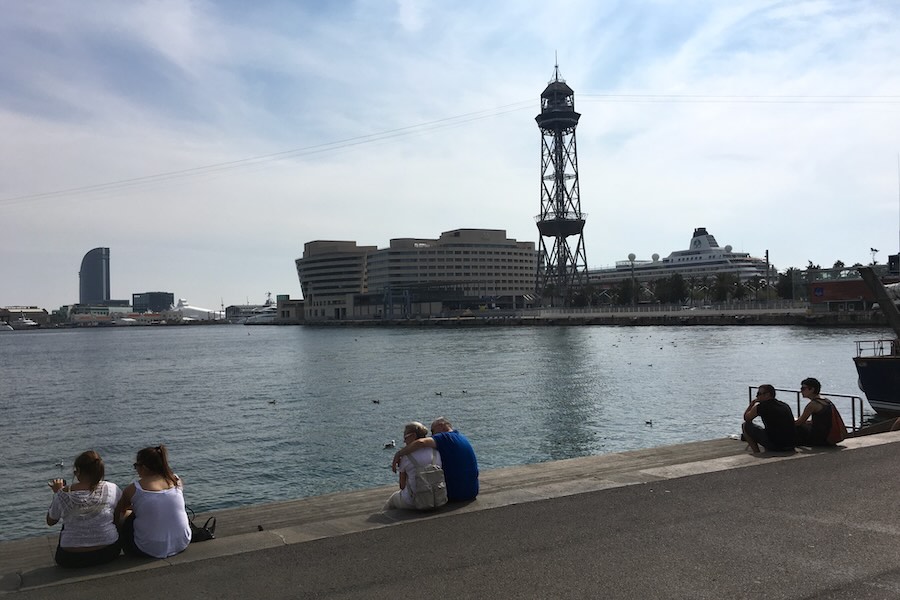
Port Vell and Torre Jaume I – Barcelona’s Harbor Views from Above
Barcelona is famous for its architecture, history, and beaches, but its old harbor, Port Vell, offers a completely different perspective on the city. Once an industrial dockland, Port Vell has been transformed into a vibrant hub of leisure, culture, and tourism, where the sea meets modern architecture.
Port Vell – from old harbor to leisure district
The name Port Vell literally means “Old Harbor.” The area was redeveloped for the 1992 Olympic Games, when Barcelona decided to reconnect the city with its waterfront. Today, Port Vell is the beating heart of the city’s seaside, with wide promenades, cafés, and views of luxury yachts moored in the marina.
Some of the area’s key attractions include the Maremagnum shopping center, L’Aquàrium de Barcelona, and the iconic W Barcelona Hotel, whose sail-shaped silhouette has become a defining feature of the city’s skyline.
Torre Jaume I and the cable car over the harbor
Dominating the scene is Torre Jaume I, the steel tower that supports the city’s cable car, known as the Transbordador Aeri del Port. Built in 1931, this aerial cableway connects Montjuïc Hill with Barceloneta Beach, gliding directly over Port Vell.
The bright red gondolas offer one of the most thrilling ways to experience Barcelona, providing sweeping views across the city, the Mediterranean Sea, and even as far as Tibidabo Hill on a clear day. When it was built, Torre Jaume I was the tallest aerial lift support tower in the world – and it still stands as an impressive landmark on the waterfront.
Why visit Port Vell?
- Scenic views: A unique combination of sea, yachts, and modern architecture.
- Cable car ride: An unforgettable way to see Barcelona from above.
- Relaxation: Perfect for a leisurely stroll or sitting by the water at sunset.
- Attractions: Shopping, the aquarium, restaurants, and striking buildings like W Barcelona and the World Trade Center.
Port Vell is a living part of the city’s modern identity. With its waterfront attractions, sweeping promenades, and the soaring Torre Jaume I cable car tower, the area beautifully combines sea, history, and urban life into one unforgettable experience.

Parc Güell and the Famous Mosaic Lizard
Barcelona is a city full of artistic treasures, but few places capture the playful spirit of Antoni Gaudí as vividly as Parc Güell. Located on Carmel Hill, this park is one of Gaudí’s most famous works and a UNESCO World Heritage Site. With its winding pathways, vibrant mosaics, and whimsical architecture, it feels like stepping into a fairytale.
The Story of Parc Güell
Parc Güell was commissioned by Eusebi Güell, a wealthy industrialist and Gaudí’s close patron. Originally envisioned in the early 1900s as a private residential garden city, the project never attracted enough buyers. By 1926, the area was transformed into a public park – a gift to the people of Barcelona.
Today, it stands as a cultural and architectural icon, drawing millions of visitors each year.
The Mosaic Lizard – El Drac
The park’s most photographed resident is undoubtedly the colorful mosaic lizard, known locally as El Drac (The Dragon) or sometimes La Salamandra. It sits proudly on the monumental staircase that leads to the park’s Hypostyle Hall.
Created using Gaudí’s signature trencadís technique – a mosaic made from broken ceramic tiles – the lizard also functions as a fountain. Water flows through its open mouth, symbolizing life and nature, recurring themes in Gaudí’s work.
Over the years, the lizard has become a symbol of Barcelona itself, appearing on postcards, souvenirs, and even city branding.
Experiencing the Park
Parc Güell is divided into two areas: the Monumental Zone (ticketed) and the free-access surrounding gardens. In the Monumental Zone you’ll find Gaudí’s most iconic creations:
- The Dragon Staircase, home to El Drac.
- The Hypostyle Hall, with 86 Doric-style columns designed to resemble a forest.
- The Serpentine Bench, a long, curving seat decorated in vibrant trencadís mosaics, offering panoramic views over Barcelona.
Why visit Parc Güell?
- UNESCO World Heritage Site – a must-see for anyone interested in Gaudí or Catalan modernism.
- Unique photo opportunities – especially with El Drac, the mosaic dragon.
- Panoramic views – from the terrace, you can see all the way to the Mediterranean.
Parc Güell is a celebration of color, creativity, and Catalan identity. The mosaic lizard, El Drac, embodies Gaudí’s ability to turn ordinary elements of nature into magical works of art. A visit here is a journey into the imagination of one of history’s most visionary architects.
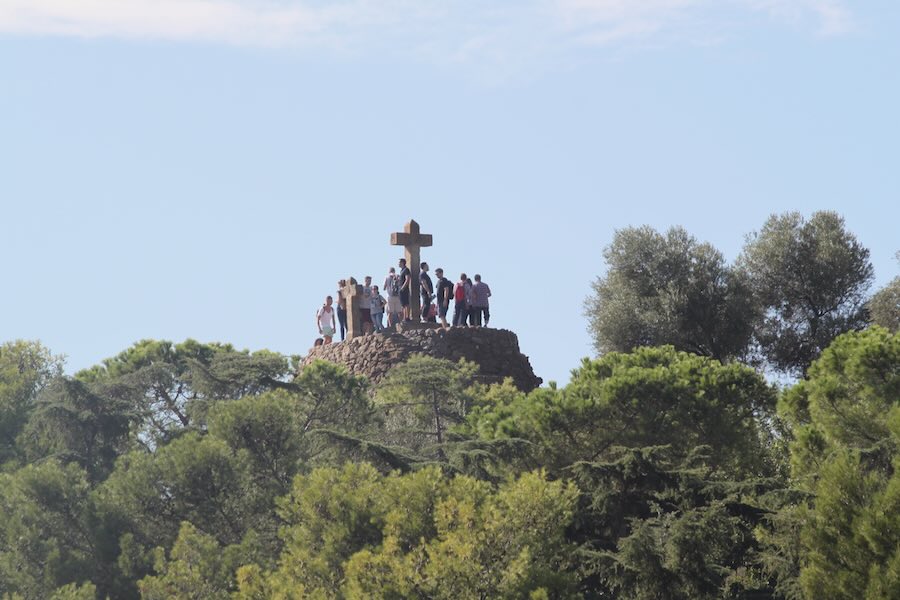
Turó de les Tres Creus – A Viewpoint Above Barcelona
Parc Güell is full of Antoni Gaudí’s playful details and architectural surprises, but its highest point offers something different – peace, symbolism, and sweeping views. This spot is known as Turó de les Tres Creus, or Hill of the Three Crosses.
Panoramic views over Barcelona
Located at the very top of Parc Güell, Turó de les Tres Creus rewards visitors with breathtaking panoramic views. From here, you can see across the entire city – from the rooftops of the Eixample district to the Mediterranean Sea, Montjuïc Hill, and on clear days even the summit of Tibidabo.
The viewpoint is especially popular at sunset, when the city glows in golden light and Barcelona unfolds in all its beauty.
Why visit Turó de les Tres Creus?
- It is the best viewpoint in Parc Güell.
- The cross combines religious symbolism with one of the most practical and scenic outlooks in the city.
- A perfect spot to pause and reflect during a busy day of sightseeing.
- Climbing up to the crosses can feel a bit intimidating, as the spot often gets crowded and there are no protective fences. Still, the panoramic views make it a rewarding experience – especially if you’re not afraid of heights.
Turó de les Tres Creus is a place where art, religion, and nature meet. For visitors, it offers a moment of calm as well as unforgettable panoramic views of Barcelona, making it the perfect way to conclude a visit to Parc Güell.


Barceloneta Beach – and Barcelona’s Vibrant Seaside Life
Barcelona is one of the few European cities, like Helsinki, where you can seamlessly combine a city break with a beach holiday. Just a short walk from the historic old town lies Barceloneta Beach, the city’s most famous and lively stretch of sand, offering sunshine, swimming, and endless activity throughout the year.
From fishing quarter to seaside hotspot
The Barceloneta neighborhood was originally built in the 18th century to house fishermen and their families. For centuries, it was a modest working-class area with narrow streets and simple homes. Everything changed in 1992, when the Olympic Games brought a massive urban renewal project. The beaches were cleaned, modernized, and redesigned – transforming Barceloneta into a world-class destination for both locals and tourists.
Things to do at Barceloneta Beach
- Sunbathing and swimming – the wide sandy beach has room for thousands of sun-seekers. Summers are buzzing with energy and beach life.
- Water sports – try windsurfing and paddleboarding, for example
- Chiringuitos (beach bars) – casual restaurants right on the sand serve paella, tapas, and refreshing drinks.
- Seafront promenade – perfect for an evening stroll or bike ride, lined with cafés, bars, and even public art installations.
Overlooking the horizon is the futuristic W Barcelona Hotel, also known as the Sail Hotel due to its striking shape. Designed by architect Ricardo Bofill and opened in 2009, it has quickly become a modern symbol of the city. The hotel offers luxury accommodation, rooftop bars, and breathtaking views of the Mediterranean – but for most visitors, it is above all an integral part of Barceloneta’s skyline.
Why visit Barceloneta?
Barceloneta Beach offers the best of both worlds: you can spend your morning exploring museums and Gothic alleyways, and by afternoon, be swimming in the sea. It’s a place where locals, tourists, and street performers all mix together in a vibrant, seaside atmosphere. It is like Barcelona’s sunny living room – a place where the city opens itself to the Mediterranean.
Read more about traveling in Barcelona and Europe from my visual travel guide INDIVUE – Trip to Europe with all authentic photos and videos by me!
Read more:
- A Photo Exhibition: Tourists in Barcelona
- Spanish dance: Flamenco performance

 INDIVUE - travel & art
Leave a comment