
Barcelona is a city whose architecture reflect layers of history: Its streets and buildings, medieval stone houses, the ornate masterpieces of Catalan modernism, and daring projects of contemporary design. Antoni Gaudí’s organic creations, such as Casa Milà, stand alongside other modernist gems like the decorative towers of Cases Rocamora. Everyday life unfolds among ordinary apartment blocks and narrow streets, providing a vivid contrast to the city’s most famous monuments.
At the same time, Barcelona looks to the future. In the heart of Plaça de Catalunya, El Corte Inglés embodies commercial modernism, while by the sea, W Barcelona – the striking Sail Hotel designed by Ricardo Bofill – reshapes the skyline with a bold architectural statement.
Barcelona’s architecture is a narrative of a city balanced between past, present, and future. Every house, street, and square invites visitors to pause, look around, and discover the true soul of the city. Enjoy these authentic photographs of Barcelona’s architecture by me!

Casa Milà – Gaudí’s Masterpiece in the Heart of Barcelona
On Passeig de Gràcia, one of Barcelona’s grandest boulevards, stands one of the city’s most iconic landmarks – Casa Milà, also known as La Pedrera. Designed by Antoni Gaudí and completed between 1906 and 1912, the building is now a UNESCO World Heritage Site.
The wavy stone façade and wrought-iron balconies make Casa Milà such an architectural gem. Its organic forms resemble waves, cliffs, and caves, reflecting Gaudí’s unique vision of blending architecture with nature.
Originally commissioned by the wealthy Milà family as both a residence and commercial space, the building today houses a museum, exhibitions, and cultural events that attract thousands of visitors each year. One of its highlights is the rooftop terrace, famous for its sculptural chimneys and fairy-tale-like atmosphere, offering breathtaking views across Barcelona’s rooftops.
Casa Milà is a symbol of Barcelona’s modernist architecture and Gaudí’s genius. For anyone visiting the city, experiencing this masterpiece is an absolute must.

El Corte Inglés – Barcelona’s iconic department store on Plaça de Catalunya
In the heart of Barcelona, right on the bustling Plaça de Catalunya, stands a massive modern building with a familiar sign: El Corte Inglés. As Spain’s largest department store chain, it is an iconic shopping destination visited daily by both locals and travelers.
The architecture of the building stands out with its clean, rectangular lines and light stone façade. While the exterior is rather understated, the interior stretches across multiple floors filled with fashion, electronics, and home goods. The store’s gourmet food hall is particularly popular, offering both Spanish specialties and international flavors.
Rumour tells that there is a restaurant and café located on the upper floors, but I have not been there. From up there visitors could enjoy panoramic views over Plaça de Catalunya, Las Ramblas, and the rooftops of Barcelona. It would be a perfect spot to take a break from shopping while soaking in the vibrant city atmosphere from above.
El Corte Inglés is part of Spanish lifestyle and urban culture. In Barcelona, it serves as both a shopping paradise and a viewpoint, making it an attractive stop for any visitor exploring the city.

Barcelona’s apartment buildings
When visiting Barcelona, most travelers are drawn to the city’s famous landmarks – Gaudí’s masterpieces, modernist façades, and the narrow streets of the Gothic Quarter. But just as fascinating is the everyday life of the city, best seen in the residential areas slightly away from the main tourist paths. There, rows of apartment blocks from the 1960s and 1970s rise up, home to thousands of Barcelonans.
These buildings share many typical features. They are usually five to seven stories high, rectangular in shape, and simple in design, yet the balconies and colorful awnings bring them to life. Each apartment has a spacious balcony that acts as an extension of the living room. In Spanish culture, balconies are essential: they are places to wave to neighbors, grow plants, or hang laundry.
The balconies also reveal personal and cultural expressions. The red-and-yellow Catalan flag, the senyera, often hangs proudly from the railings, symbolizing regional identity and pride. Sometimes you’ll also see the colors of FC Barcelona – the city’s beloved football club – displayed as a declaration of loyalty.
On the ground floor, most buildings host small businesses: kiosks, cafés, grocery stores, or cozy bars serving coffee and bocadillos. These corner shops foster a strong sense of community. During the day, locals drop in for errands, and in the evenings the streets fill with neighbors chatting as they pass by.
Though these blocks are not tourist attractions, they reveal a lot about Barcelona’s character. They reflect the city’s rapid growth after World War II, when new housing was needed for the increasing population. They also illustrate how everyday life, community, and culture intertwine in a modern Mediterranean metropolis.
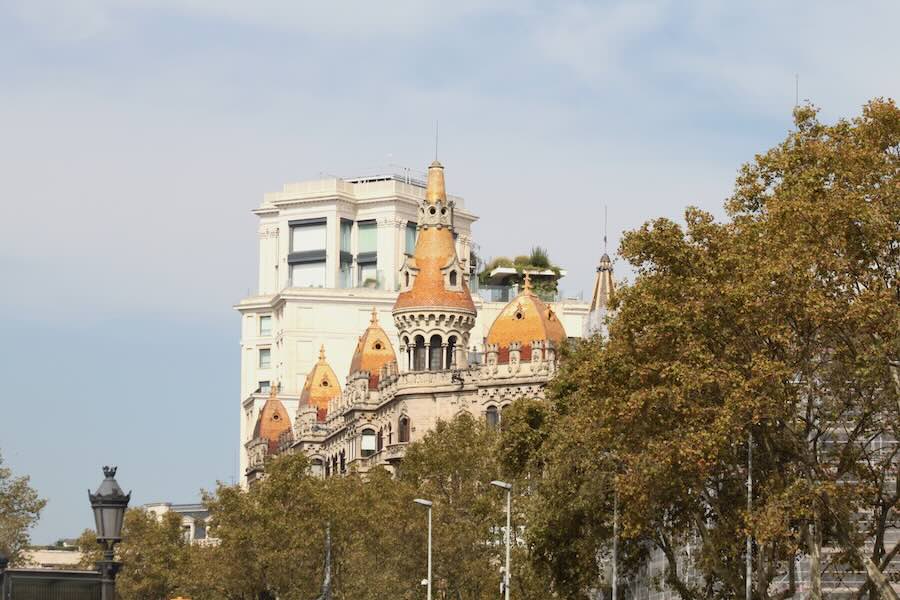
Cases Rocamora – An Ornamental gem on Passeig de Gràcia
On Barcelona’s famous Passeig de Gràcia stands one of the boulevard’s most striking buildings – Cases Rocamora. Completed in 1914 and designed by architect Josep Bassegoda i Amigó, this complex represents Catalan modernism enriched with Gothic and Renaissance influences.
Cases Rocamora is especially eye-catching thanks to its ornate towers topped with orange-tiled cones, which can be seen from afar and give the building a fairy-tale appearance. The façade is filled with details: arches, balconies, and decorative elements that invite you to take a closer look.
The building is part of the “Illa de la Discòrdia” or “Block of Discord,” where several modernist masterpieces by different architects stand side by side. The block got its name because of the strong stylistic contrasts that make the buildings appear to be in visual competition.
Though less famous than Gaudí’s Casa Batlló or Casa Milà, Cases Rocamora is an essential piece of Barcelona’s architectural heritage. It reflects the richness of Catalan modernism and offers visitors a glimpse into the city’s passion for ornamental beauty.
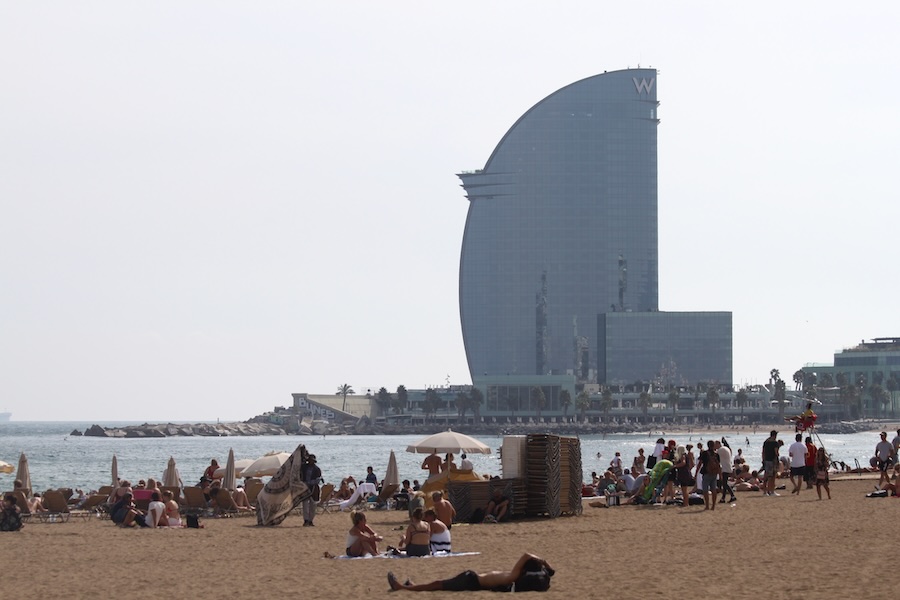
W Barcelona – The “Sail Hotel” on Barceloneta Beach
Rising on Barcelona’s waterfront, it is impossible to miss the modern landmark of W Barcelona, better known as the Sail Hotel (Hotel Vela in Spanish). Standing at the end of Barceloneta Beach next to the Port Vell marina, this building has quickly become one of the city’s contemporary icons.
The hotel was designed by renowned architect Ricardo Bofill (1939 – 2022) and completed in 2009. Standing 99 meters tall, its shimmering glass façade reflects the sea and sky, creating the illusion of a giant sail catching the Mediterranean breeze. This distinctive silhouette made it instantly recognizable and symbolic of Barcelona’s modern skyline.
Architecturally, W Barcelona represents sleek, international modernism, a sharp contrast to the city’s traditional Catalan modernism and Gaudí’s organic masterpieces. It embodies Barcelona’s dual identity – a city rooted in its rich architectural past while embracing bold visions for the future.
Inside, the hotel continues this modern approach with open spaces, glass walls, and minimalist design. Guests enjoy five-star luxury, a rooftop terrace, an infinity pool, and the famous Eclipse bar on the top floor, offering panoramic views over the Mediterranean and the city.
W Barcelona is an architectural statement, showcasing Barcelona also as a stage for innovative contemporary design.
Read and watch more

 INDIVUE - travel & art
Leave a comment