
Winter flying in Northern Europe follows a rhythm of its own, and at Helsinki-Vantaa Airport this rhythm is shaped by snow, ice, and meticulous ground operations. Before a winter flight can safely depart, one essential procedure takes place on the apron: aircraft de-icing. The following article and video documents this process, as seen from inside the passenger cabin.
Arrival on the snowy apron
The process begins once the aircraft has reached its stand or a designated de-icing area. Outside the window, the apron is covered in snow and ice, with visible tire tracks cutting through the white surface. Winter conditions in southern Finland can change rapidly, which might make it require de-icing before takeoff.
At this stage, the aircraft appears still and silent, but the preparation for flight is already underway. Ground vehicles position themselves nearby, and the atmosphere feels calm yet highly controlled.
De-icing vehicles move into position
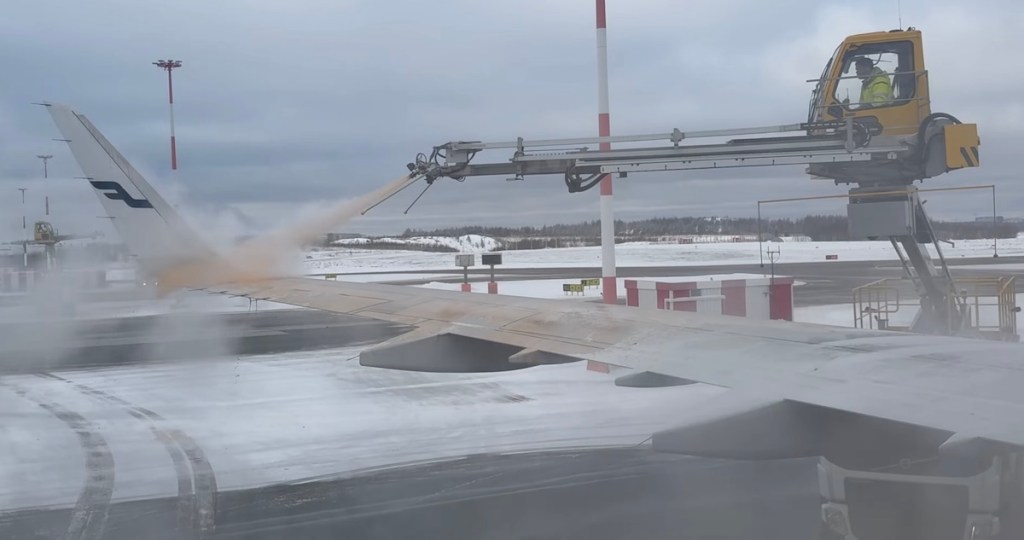
Specialized de-icing trucks approach the aircraft, their long, articulated booms extending toward the wings and tail. These vehicles are designed to operate safely around aircraft structures, allowing operators to reach even the highest surfaces with precision.
From the cabin window, passengers can clearly see the yellow operator cabin elevated above the truck, offering a direct line of sight to the wing and tailplane. Every movement is deliberate, guided by strict safety protocols and coordination with the flight crew.
Targeting the most critical surfaces
The wing surfaces and the vertical stabilizer are aerodynamically critical, and even a thin layer of frost can significantly affect lift and handling. The photographs show the boom aligning carefully with the wingtip and tail, positioning the spray nozzles at an optimal angle.
At this moment, the aircraft still looks clean to the untrained eye, but aviation standards do not allow for visual guesswork. If conditions indicate potential contamination, de-icing is mandatory.
Spraying the de-icing fluid
As the process begins, a heated de-icing fluid is sprayed onto the aircraft surfaces. From inside the cabin, this appears as a dense mist or stream, briefly obscuring the view. The fluid used is typically glycol-based, heated to remove ice and prevent further accumulation.
In the video you can see how the spray leaves a light-colored residue as it flows across the wing, carrying away ice, snow, and frost. The operation continues methodically, section by section, ensuring full coverage.
A moment of whiteout at the window
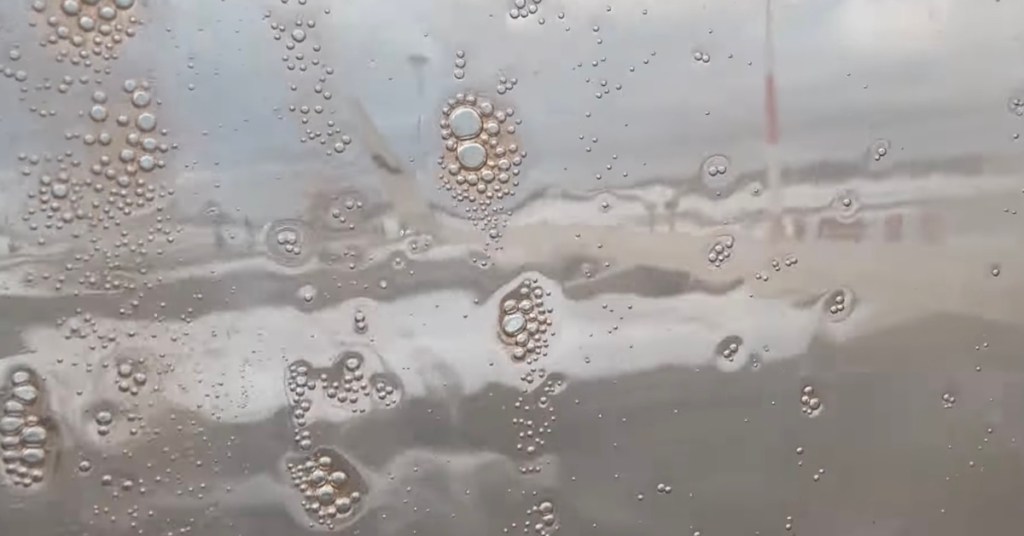
During the most intensive spraying phase, visibility from the cabin can drop dramatically. The window becomes covered in fluid droplets, forming bubbles and streaks that distort the outside world. For passengers unfamiliar with winter operations, this can be a surprising sight, like it was for me. But it is a completely normal and reassuring part of cold-weather flying.
The fluid on the window creates abstract patterns, briefly turning the snowy airport landscape into a blurred, almost painterly scene, which I was happy film from my window seat.
Completion and final checks
Once spraying is complete, the de-icing vehicles slowly retract their booms and move away from the aircraft. The wing surfaces now appear wet but clean, free of ice and snow. Timing is critical: the aircraft must take off within a defined “holdover time,” during which the fluid remains effective in preventing re-freezing.
After the process, the de-icing trucks disappear into the distance, and preparations for take-off begin.
Why de-icing matters in Helsinki
At Helsinki Airport winter operations are a core competence. The airport handles long winters with temperatures frequently below freezing, making de-icing an everyday necessity rather than a rare event. The efficiency and precision of this process ensure that flights can operate safely even in challenging Nordic conditions.
For passengers, witnessing de-icing from the cabin offers a rare behind-the-scenes look at aviation safety. It is a reminder that winter flying is about pilots and aircraft, as well as about highly trained ground crews working in cold, demanding environments to make every departure possible.
A quiet ritual before takeoff
Seen through the window, de-icing is both technical and strangely mesmerizing. Snow-covered runways, slow-moving machines, clouds of steam-like spray, and the brief transformation of the window into a canvas of droplets all form part of a winter flight ritual. Only once this ritual is complete can the aircraft line up for departure, ready to lift off safely into the cold northern sky.
Read also Winter at Helsinki airport
Watch more my aviation videos
Read about European travel destinations



 INDIVUE - travel & art
Leave a comment