
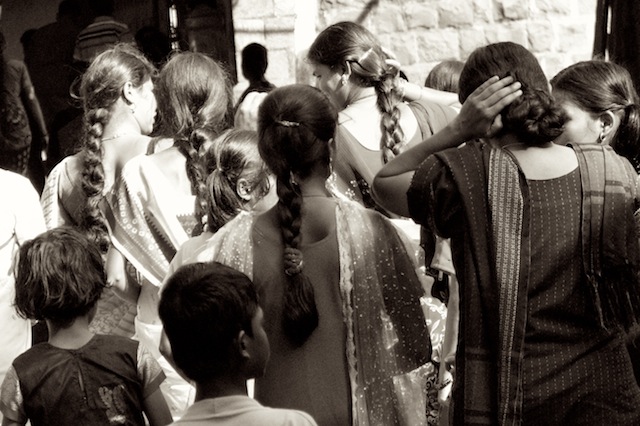
As the pictures here show, the scale is from one side to another, when you study Indian women’s diverse clothing and fashion on the streets and roads of India in the years 2007-2012. And these photographs don’t definitely have it all, they are just giving you some kind of idea, since for example, in every Indian state women have the state’s own unique way to tie the saree.
Somewhere in India sari is in turn replaced with a long skirt and blouse and in Goa Catholic women wear mostly dresses. Whereas in Karnataka some women wear clothing that reveals the back and shoulders, which elsewhere in India is covered with a dupatta.
Although in big cities salvar kameez is sometimes changed for jeans or shorts and a t-shirt, people are still not much aware of this in the remote villages of India, where many women still hide themselves behind the scarf in order to show respect for an older man. It can also be a learned habit used for self-defence during many generations.



More about the photos of Indian women’s clothing and street fashion
These images, captured in various locales, provide a glimpse into the everyday street fashion of Indian women, illustrating how traditional attire remains deeply rooted in daily life.
Traditional Attire: Sarees and Salwar Kameez
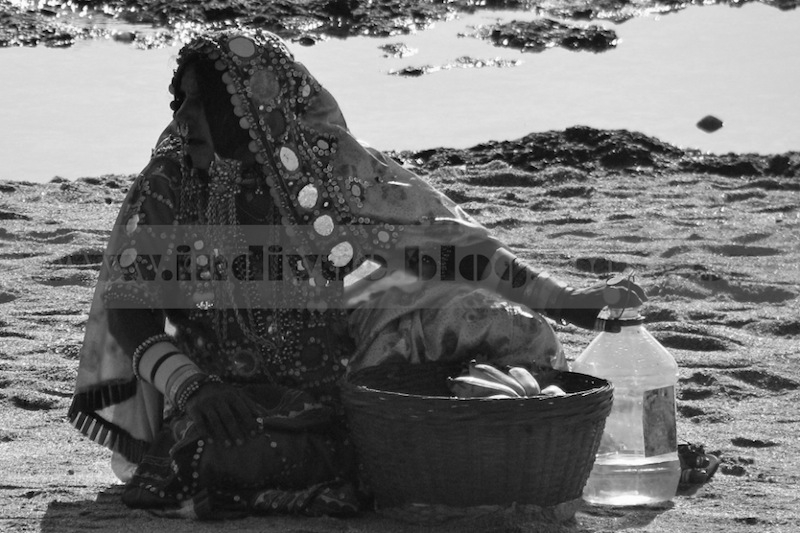
- Image 1: This photograph features a woman sitting on the beach, dressed in a traditional saree with intricate embroidery. The saree, a long piece of cloth draped elegantly around the body, is often worn with a blouse and petticoat. The woman also wears traditional jewelry, adding to her vibrant look. Her basket and bottle suggest she might be a vendor or someone involved in daily chores, portraying the practicality and versatility of the saree.
- Image 2: Here, a group of women is seen waiting, possibly for public transportation. They are all dressed in sarees and salwar kameez, another traditional attire. The salwar kameez consists of a tunic (kameez) paired with trousers (salwar) and is often accompanied by a dupatta (scarf). This attire is particularly popular for its comfort and ease of movement.
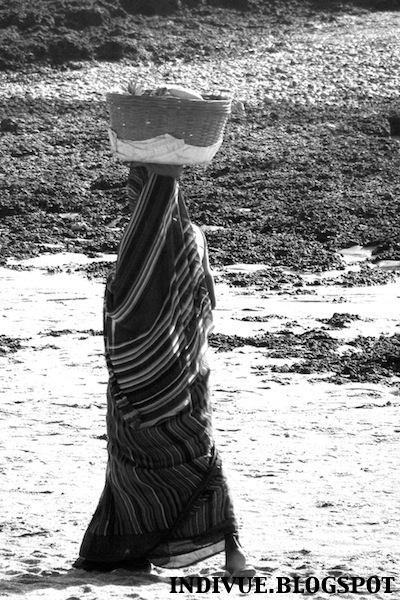
- Image 3: This image captures a woman walking along the beach with a basket on her head, showcasing the traditional saree’s functionality. The saree’s design is simpler compared to the heavily embroidered ones, highlighting its use in daily activities and labor-intensive tasks.
Market Scenes and Daily Life
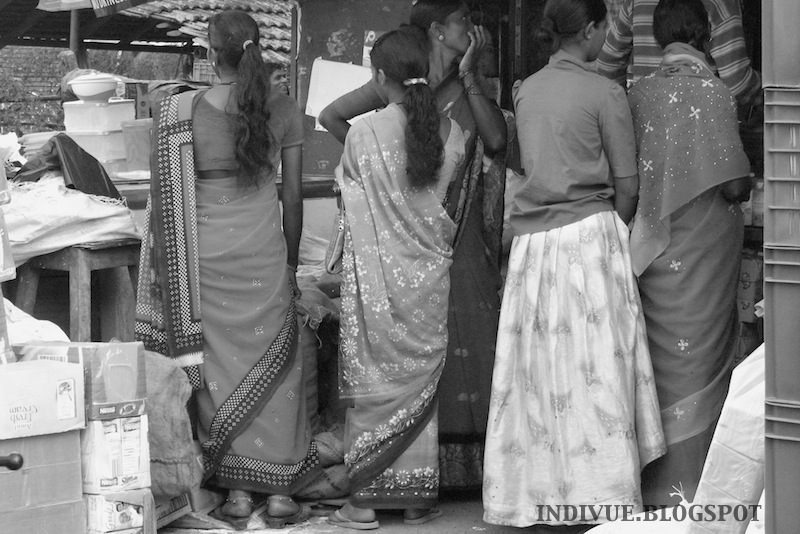
- Image 4: A busy market scene where women, dressed in sarees and salwar kameez, are engaged in shopping or trading. The photo captures the essence of daily life and the integral role of traditional attire in these routines. The mix of patterns and colors reflects the rich textile heritage of India.
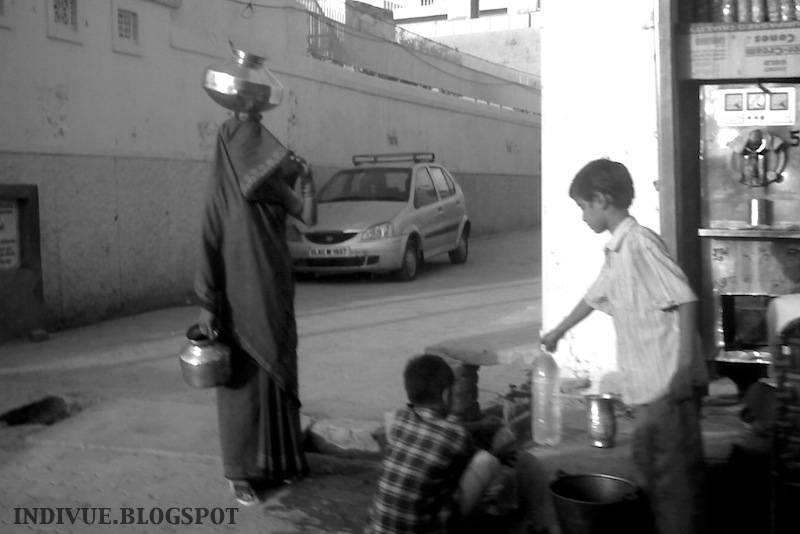
- Image 5: This photograph shows a woman carrying utensils, likely on her way to or from fetching water. The simplicity of her attire, yet the graceful draping of the saree covering her totally, demonstrates the blend of utility and tradition in everyday clothing.
Urban Life and Modern Influences
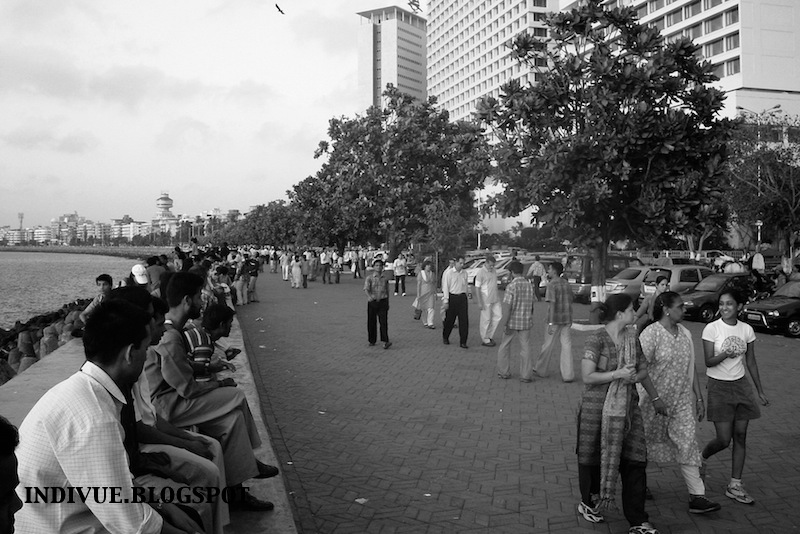
- Image 6: A bustling urban promenade with people strolling by the waterfront. Despite the modern urban setting, many women are seen in traditional sarees and salwar kameez, highlighting the enduring popularity of these garments even in contemporary settings.
- Image 7: A candid shot of a couple engaged in conversation in Delhi. The woman is dressed in a long coat, indicating colder weather, yet the traditional elements are still visible. This image shows how traditional clothing adapts to different climates and settings.
- Image 8: A snapshot of a modern Indian street, where a woman is dressed in a kurta (tunic) and jeans. This blend illustrates the evolving fashion scene in India, where modern and traditional styles often coexist harmoniously.
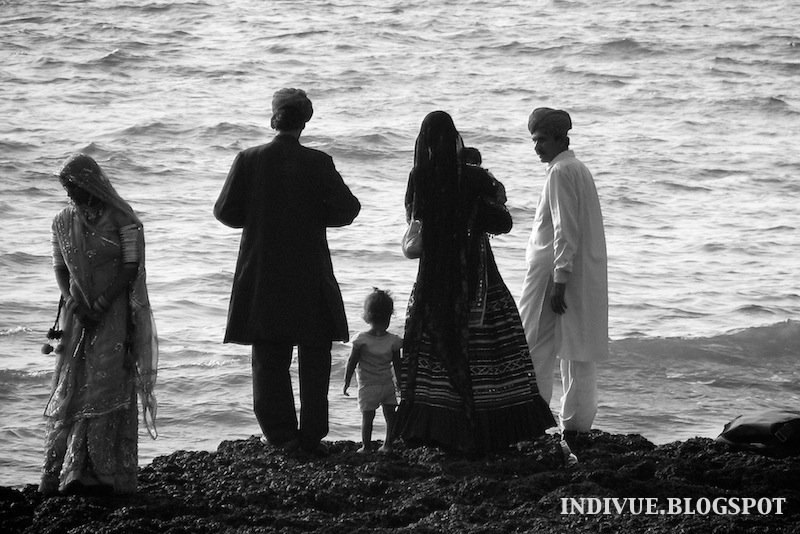
- Image 9: A family by the seaside, adorned in traditional attire. The diversity in their clothing—ranging from sarees to ethnic suits—reflects the varied fashion choices within Indian society.
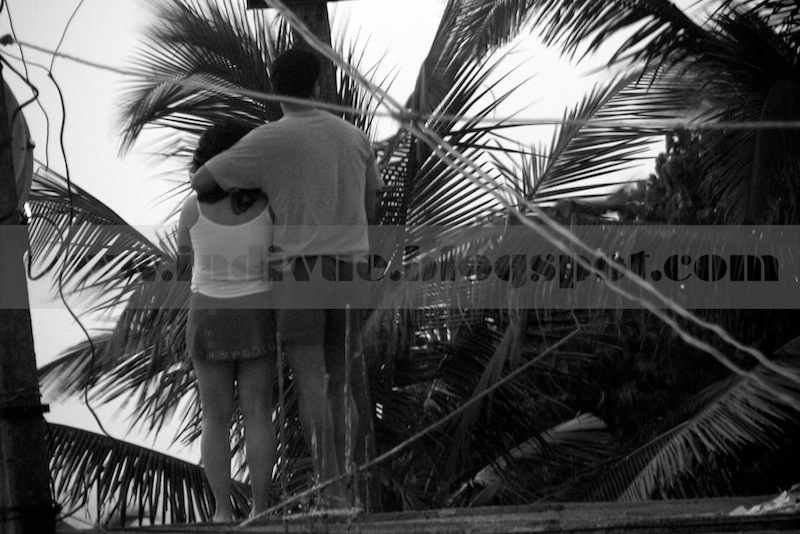
- Image 10: A tender moment between a holidaying couple, with the woman in casual, modern attire. This contrast to the preceding images underscores the dynamic nature of Indian fashion.
- Image 11:
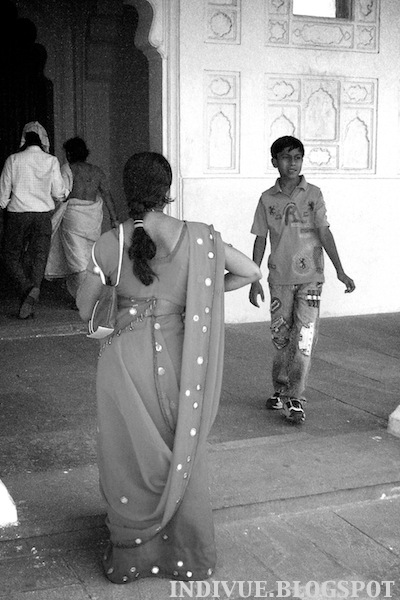
In this image, a woman is captured from behind as she walks into a cultural site. She is dressed in a saree, a traditional Indian garment that is six to nine yards in length. The saree is draped in a style that allows for freedom of movement, indicative of its practical use. The saree’s design is simple yet elegant and seen in this context, it is not only a daily wear but also a symbol of respect and reverence for tradition and history. - Image 12:
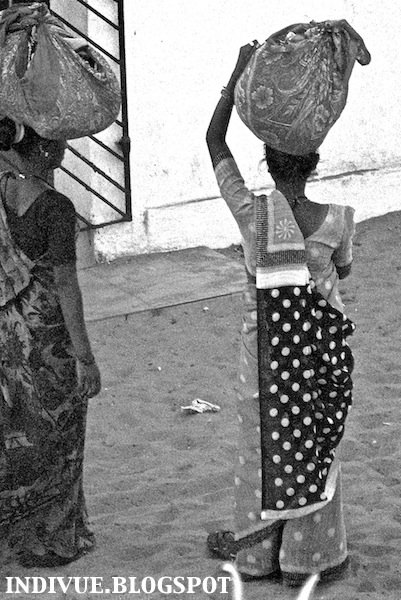
This photograph captures two women carrying heavy loads on their heads, a common sight in many parts of India. The women are dressed in sarees, which are beautifully adorned with polka dots and traditional motifs. The manner in which the sarees are draped allows for both mobility and balance, essential for carrying such burdens.
The practical yet elegant draping style underscores the saree’s versatility as both a working garment and a piece of cultural attire.
Conclusion
Did you know, that if you feel like you can’t find anything to wear from the European shops, the key for your problem may well be found from India, as I myself have noticed.


 INDIVUE - travel & art
Leave a comment