
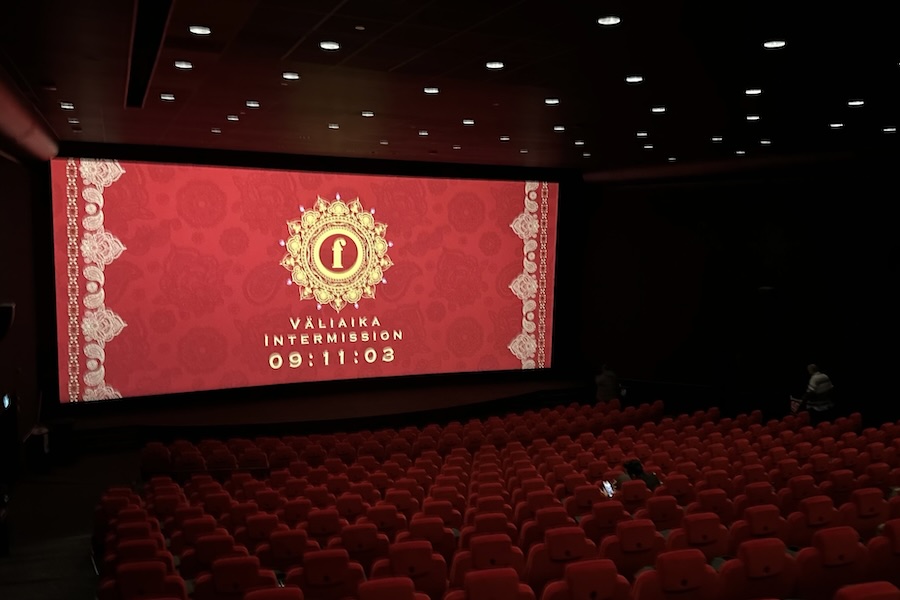
The film “Dunki,” starring Shah Rukh Khan and directed by Rajkumar Hirani, had its global premiere yesterday 21.12.2023. I went to see the film in Helsinki, Finland, and here’s my review –
Set in a village in Punjab, a state in India, where I have not yet had a chance to visit, made the film more interesting. The story revolved around four friends who shared the common aspiration of journeying to England, facing the significant hurdle of not having visas or tickets. This plotline offered a blend of drama and social commentary, resonating with the aspirations and challenges of many in India.
Shah Rukh appeared in the movie as both young and old, with the youth achieved through digital means. In my opinion, Shah Rukh Khan didn’t look like himself as young, he was very thin and looked kind of sick, which bothered me and did not let go with the story. Luckily the film was a comedy, although it dealt with serious issues like stowaway travel. I realized that I was not the film’s primary target audience, and maybe that’s why the film didn’t impress me more than a three-star rating.
But yes, the movie can be watched once, especially if you’re a Shah Rukh Khan fan, or if you want to know how people from India can end up to Britain illegally. The movie lasted 3 hours with an intermission to tell you this. Btw. – to my knowledge, Bollywood movies are the only ones in Finland that provide an intermission, which is a welcome feature for long movies.
“Dunki” emerged as a storytelling masterpiece and a masala movie, combining humor, emotion, and social commentary to create a film that is both entertaining and thought-provoking. The film’s music was composed by Pritam Chakraborty, which added to its overall appeal.
Watch my YouTube Shorts film about the cinematic experience of Bollywood in Finland –
But what is a dunki?
In the context of immigration, “Dunki” is a colloquial term used in parts of South Asia, particularly in India, to refer to illegal or irregular migration, often facilitated by smugglers. The term has gained some notoriety and is commonly used in conversations about people who attempt to migrate to countries like the United States, Canada, or countries in Europe through unauthorized means.
The process typically involves paying large sums of money to agents or smugglers who promise to facilitate the migration. These agents often use various illegal and dangerous methods to transport people across borders. The journey can be perilous, involving travel through multiple countries, often in unsafe conditions.
This form of migration is driven by various factors, including economic opportunities, the desire for a better life, escaping difficult conditions in the home country, or joining family members who are already abroad. However, due to the illegal nature of such migration, it involves significant risks, including the danger of being detained, deported, or facing exploitation and abuse.
“Dunki” routes are often complex and can vary greatly, but they typically involve crossing multiple international borders and often include a mix of land, air, and sea travel. The people undertaking these journeys might pass through several transit countries before reaching their final destination.
The use of the term “dunki” reflects the informal and often clandestine nature of these migration attempts. It is important to note that such forms of migration are not only dangerous for the individuals involved but also constitute a legal violation in many destination countries.
Who is Taapsee Pannu?
Taapsee Pannu performed the lead role in the film Dunki. She is an acclaimed Indian actress known for her versatile roles in Hindi, Telugu, and Tamil films. She was born in 1987 in New Delhi, India, and raised in Delhi as well. She began her career in the South Indian film industry before making her mark in Bollywood.
Career Highlights
- Debut and South Indian Cinema: Taapsee’s acting career began with the 2010 Telugu film “Jhummandi Naadam.” She quickly became a prominent figure in South Indian cinema, appearing in various Tamil and Telugu films.
- Bollywood Breakthrough: Her Bollywood debut was in the 2013 film “Chashme Baddoor.” However, her performance in the 2016 film “Pink” alongside Amitabh Bachchan brought her critical acclaim and recognition in Hindi cinema.
- Diverse Roles and Critical Acclaim: Taapsee is known for choosing diverse and challenging roles. Some of her notable films include “Naam Shabana” (2017), where she played a spy; “Soorma” (2018), a sports biopic; and “Badla” (2019), a thriller.
- Commercial Success and Recognition: Her role in “Saand Ki Aankh” (2019) and “Thappad” (2020) has been particularly praised for its depth and her powerful performance. These films also contributed to her growing reputation as a leading actress in Bollywood who can carry a film on her shoulders.
- Awards: Pannu has received several awards and nominations for her performances, including the Filmfare Critics Award for Best Actress.
Read more about Shah Rukh Khan and his films from my previous article Best of 5 of Shah Rukh Khan -movies.
What is VFX effect in the film Dunki and how come Shah Rukh Khan looks so young?
In the film “Dunki,” directed by Rajkumar Hirani, visual effects (VFX) played a significant role, particularly in creating a de-aged version of Shah Rukh Khan. This VFX technique was a central aspect of the film’s visual narrative. However, the use of de-aging VFX on Shah Rukh Khan has sparked mixed reactions among the audience and critics. While some appreciated the fresh, youthful appearance of the actor, others felt that the VFX was excessive, detracting from the film’s engagement and authenticity.
Additionally, there was a minor glitch in the film’s VFX where a man mysteriously appears and disappears in a scene. This incident attracted considerable attention on social media, with fans and critics analyzing the teaser in detail and discussing the film’s use of VFX.
The film’s VFX, particularly the de-aging technology, was a topic of much debate, reflecting the challenges and complexities of using visual effects in cinema to enhance storytelling while maintaining a balance with realism.
De-aging VFX technology involves sophisticated visual effects techniques to make actors appear younger on screen. Here’s an overview of this technology:
- Digital Makeup: Essentially, de-aging can be thought of as digital makeup. Using software, artists remove wrinkles, tighten skin, and alter facial features to a younger state.
- Motion Capture and CGI: In more advanced cases, motion capture technology is combined with CGI (Computer-Generated Imagery). Actors perform with motion capture dots on their faces, capturing their expressions. This data is then used to create a younger version of their face digitally.
- Reference Material: VFX artists often use old photos and films of the actor as a reference to recreate their younger appearance accurately.
- Layering and Texturing: The process involves layering and texturing to add depth and realism to the face. Artists must balance making the face look young while retaining the actor’s current expressions and acting nuances.
- Rendering and Compositing: Finally, these elements are rendered and composited into the final film seamlessly, so the de-aged face looks natural in motion and in different lighting conditions.
This technology requires a significant amount of time, skill, and computing power. While it opens up new storytelling possibilities, it also raises discussions about authenticity in performance and the limits of digital manipulation in film. But what speaks on VFX’s behalf is that female actresses in Bollywood could have a longer film career as well!
Useful links:



 INDIVUE - travel & art
Leave a comment