
*pr-event @spain @tastingspain
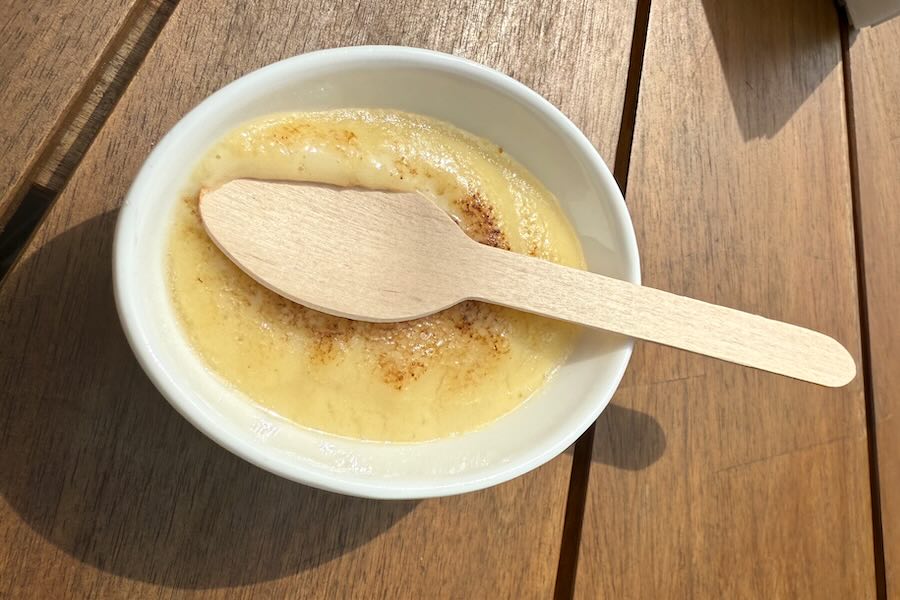
The early summer sun peeked through the clouds onto the terrace of the NH Collection Helsinki Grand Hansa restaurant, right along Mannerheimintie. I had just listened to, among others, the Spanish Ambassador to Finland talk about Spanish tapas and had enjoyed tasting a few, when it was time for dessert – something both traditional and beloved: Crema Catalana. Served in a simple white dish with a wooden disposable spoon, the dessert turned out to be far more than it appeared at first glance. It was, in fact, a journey into the heart of Catalonia.
The golden top of the tapa-style dessert was lightly caramelized, forming a delicate, crackling crust. Underneath, a silky custard was scented with lemon and cinnamon. Unlike French crème brûlée, which is topped with a thick layer of burnt sugar, Crema Catalana is traditionally caramelized with a hot iron, creating a glass-thin, fragile topping. Its roots date back to medieval times, making it one of Europe’s oldest known desserts.
This dessert, served on a Helsinki hotel terrace, was a beautiful representation of tradition – both in taste and presentation. The rustic feel of the wooden spoon brought to mind homemade kitchens and family recipes. The sugar cracked delicately, and the custard melted instantly on the tongue.
So if you have a sweet tooth and an interest in local culinary traditions, Crema Catalana is an essential treat to try in Catalonia – whether in a bustling tapas bar in Barcelona or on a quiet coastal terrace. I had never tasted it before, even though I had visited Barcelona twice. I mostly remember the feeling I left with: that truly good tapas bars felt almost hidden from public view, as I didn’t really encounter many during my visits.
Travel Tip: Where to Find Crema Catalana in Catalonia
Where: Widely available throughout Catalonia – especially in restaurants, tapas bars, and bakeries. In Barcelona, try historic establishments like Can Culleretes.
Price: Around €4–6, depending on the location.
Best season: Available all year, but especially popular on Saint Joseph’s Day (March 19th).
Dietary note: Contains milk and eggs – not suitable for vegans or those with dairy or egg allergies.
Insider tip: Ask if the dessert is casolana (homemade); the flavor is often far superior to industrial versions.
World Tapas Day on June 19th, 2025
While Spain is famous for its sunshine, historical towns, and rich culture, for many modern travelers, food is becoming the main reason to visit. The theme of the 2025 World Tapas Day event captures this perfectly:
“The tapa says it all.”
A small bite that connects people, tells stories, and represents Spanish culture in a single mouthful.
Tapas Connect People and Tell Stories
A tapa is a dish and a way of living, sharing, and experiencing togetherness. This simple yet meaningful small plate represents the Spanish lifestyle: food that brings people together, sparks conversation, and builds connection. It is a cultural gesture that speaks without words and leaves lasting impressions.
Finns Love Spain – And Its Cuisine
The numbers speak for themselves: 61% of Finns have already visited Spain, and over 600,000 return each year. One of the biggest draws is undoubtedly Spanish cuisine. In 2025, Spain is a global culinary powerhouse with 291 Michelin-starred restaurants and ranks as the world’s second-largest wine exporter.
Tapas – A Universal Language of Tradition
One unique feature of Spanish food culture is even found in the language: the verb “tapear” – meaning “to go for tapas” – exists only in Spanish. It’s a sign of how deeply rooted tapas culture is in the Spanish identity. And yet, tapas transcends language – it doesn’t need words, only a willingness to share a moment. Tapas is almost like a daily Instagram post, if you’ll allow me the comparison – short, memorable, and meant to be shared.
Finnish “Pikkupurtava” Meets Spanish Tapas
Finns are no strangers to the idea of small bites – pikkupurtava is a familiar concept. Though they come from different cultures, the experience is largely the same: eating in a social, relaxed, joyful setting. Tapas is also environmentally conscious – based on seasonal, local ingredients and meant for sharing. It is hospitality and sustainability at its best.
A Reason to Travel – Again and Again
Spain’s food culture – and especially tapas – gives travelers a perfect reason to return time and again. With over 263,000 restaurants and bars, Spain invites visitors to taste, explore, and immerse themselves in its culture one bite at a time.

Crema Catalana – The Sweet Star of Spanish Tapas
Here’s a traditional Crema Catalana recipe – this delicious dessert is slightly similar to crème brûlée, but typically made without cream and flavored with citrus and cinnamon.
Crema Catalana – Traditional Spanish Recipe
(Serves 4–6)
Ingredients:
- 500 ml whole milk
- 1 cinnamon stick
- Zest of 1 lemon (yellow part only)
- 4 egg yolks
- 100 g sugar
- 20 g cornstarch (Maizena)
- Topping: brown or white sugar for caramelizing
Instructions:
1. Infuse the milk
Heat milk with cinnamon and lemon zest until nearly boiling. Remove from heat, let steep for 10 minutes, then strain.
2. Whisk the base
In a bowl, whisk egg yolks, sugar, and cornstarch into a pale, smooth mixture.
3. Combine and cook
Slowly whisk the warm milk into the egg mixture. Return to the saucepan and heat gently, stirring constantly, until the mixture thickens like custard. Don’t let it boil.
4. Cool down
Pour into serving dishes. Let cool, then refrigerate for at least 2–3 hours or overnight.
5. Caramelize
Before serving, sprinkle a thin layer of sugar on top. Use a kitchen torch or broiler to caramelize until golden and crisp.
Serving Tip:
Crema Catalana is served cold with a hot, crackling top – the perfect finish to a tapas evening or Spanish meal.
Finally, watch the short video I made about the dishes from this year’s Tapas day in Helsinki –
Read and watch more –




 INDIVUE - travel & art
Leave a comment