

*pr-trip with Visit Tallinn, Visit Estonia, Eckerö Line, Viking Line and Tallink | Silja
Patarei Prison in Tallinn, now a defunct prison facility, has transformed into a captivating public attraction. Less than a year ago, I explored this historical site armed with my camera, resulting in an evocative video that captures its essence.
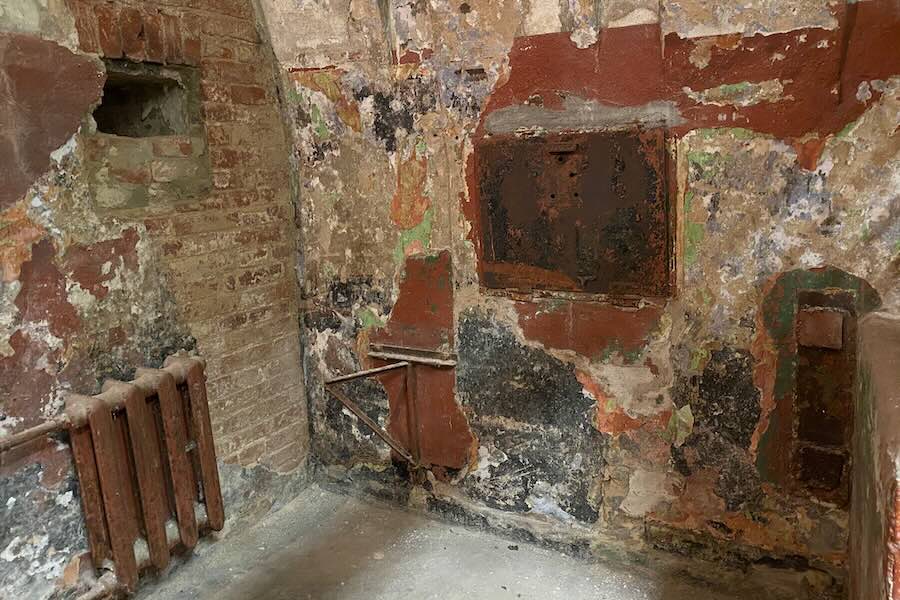
Situated along the seafront, Patarei is constructed from light-colored brick, lending it a deceptively serene appearance. Inside, the paint on its walls is flaking, revealing layers of history and despair. The artistry within these walls speaks volumes; murals depict scenes more reflective of angst and desolation than any attempt to uplift or brighten the grim atmosphere. A notable exception is found in a cramped corner, where framed portraits sketched by a former inmate hang, each stroke telling a silent story of incarceration.
Patarei Prison is not just an architectural relic; it’s a repository of historical narratives. Alongside the bleak artistic expressions, the prison houses several exhibits that delve into its layered past.
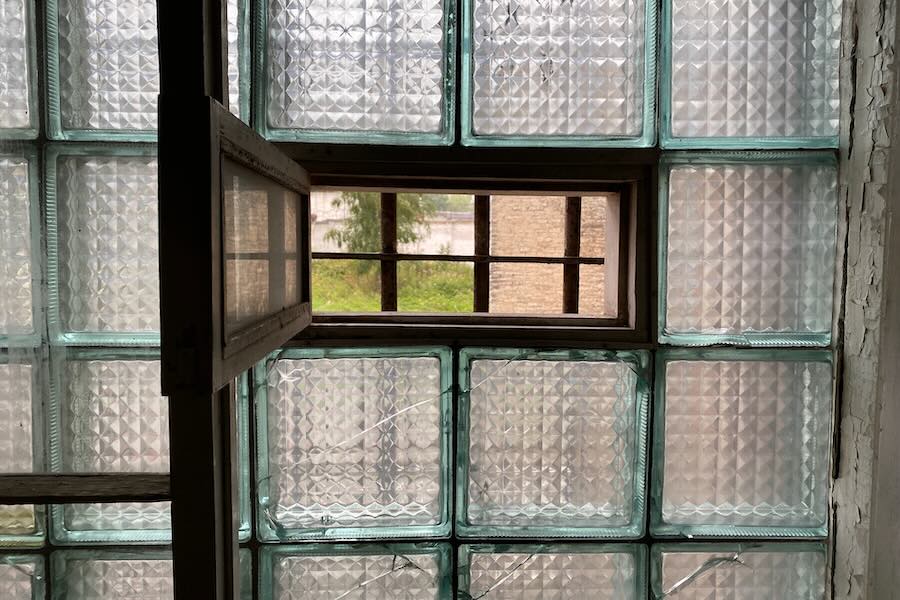
The building’s large windows face the sea, casting light into its somber interior, a stark contrast to the cell windows, secured with imposing steel bars. These elements of light and shadow play across the prison’s hollows, underscoring the stark reality of confinement.
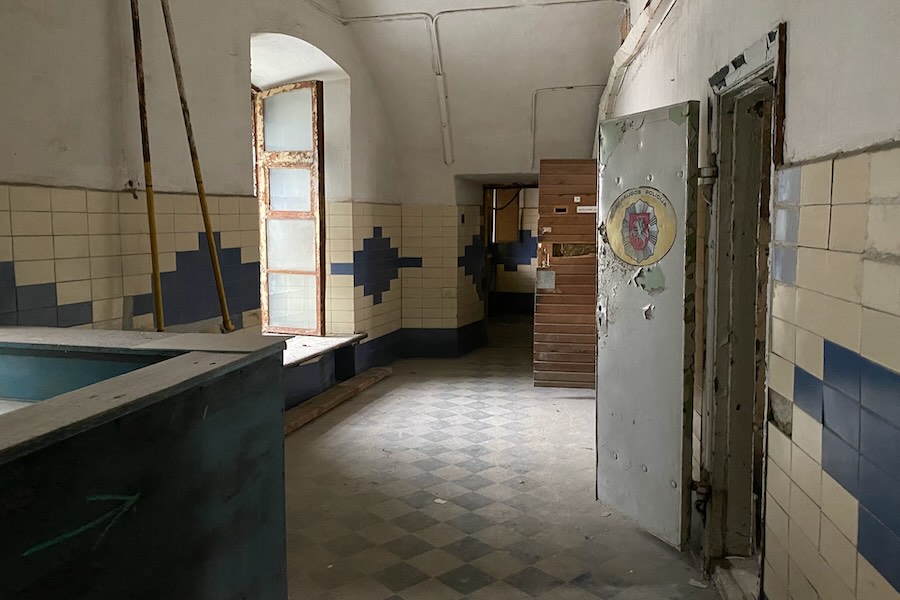
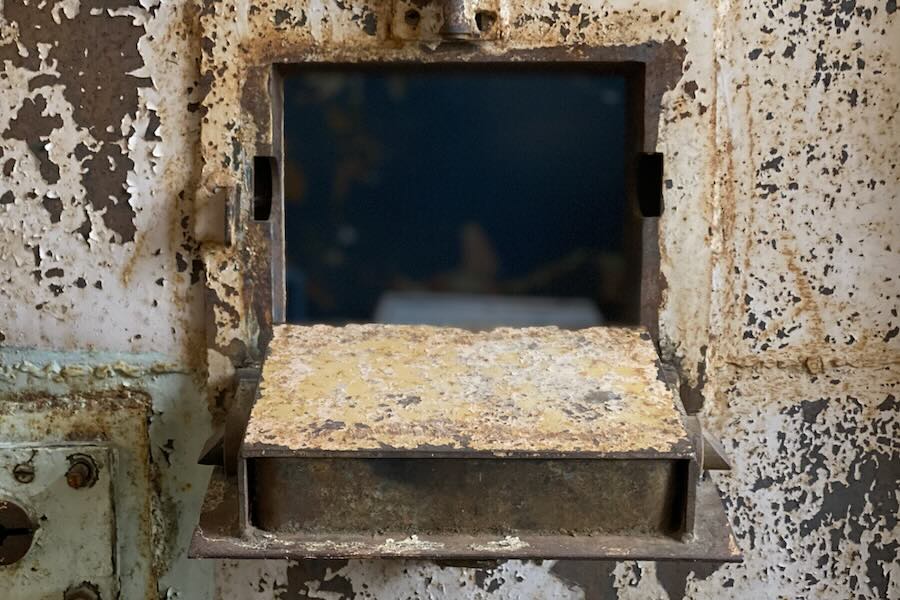
Much of Patarei remains untouched, preserving its original state. This authenticity offers visitors a visceral glimpse into the life of a prisoner. Particularly chilling are the sights of the dimly lit dungeon, viewed through a small aperture in a thick steel door, and the communal bathroom with its rudimentary stone-carved facilities.
The thought of being confined within these walls is unfathomable. This sentiment is echoed in the striking stone carvings on the prison’s exterior, depicting figures in a desperate bid for freedom through the windows. These sculptures, carved with remarkable detail, are not just art; they are powerful symbols of the human yearning for liberty, a theme that resonates profoundly within the walls of Patarei Prison.
Watch my video of visiting Patarei Prison here –
Patarei Prison, a Dark Relic of Estonia’s Past
Located in the Estonian capital of Tallinn, Patarei Prison stands as a somber reminder of the country’s turbulent past. Originally constructed as a sea fortress in the 19th century, Patarei evolved into one of the most notorious prisons in the Soviet Union. Today, it serves as a powerful historical site, inviting visitors to delve into the darker chapters of Estonian history.
Patarei, initially built between 1828 and 1840 under the orders of Russian Emperor Nicholas I, was designed as a coastal defense battery. Its strategic location near the Gulf of Finland made it an ideal military installation. However, its role dramatically shifted in the 20th century, particularly during the Soviet occupation of Estonia.
In the 1920s, the Estonian government repurposed Patarei as a prison, a function it would retain for much of its history. Its transformation into a high-security prison occurred under the Soviet regime post World War II. The prison became a site of political repression, housing dissidents and enemies of the state.
The conditions inside Patarei were notoriously harsh. Overcrowding, poor sanitation, and minimal medical care were prevalent. The prison cells, originally built for military use, were cramped and lacked basic facilities.
Patarei in Modern Times
Following Estonia’s independence in 1991, Patarei continued to operate as a prison until its closure in 2002. In the years that followed, the site transformed into a haunting, albeit poignant, tourist attraction. Its decaying walls, untouched cells, and execution room offer a stark, unfiltered glimpse into its grim history.
As a historical site, Patarei serves several vital functions. It’s a place of remembrance and reflection, honoring those who suffered under repressive regimes. For Estonians, it’s a symbol of resilience and the struggle for independence. For visitors, it provides an educational experience, highlighting the importance of human rights and the dangers of totalitarianism.
There have been efforts to repurpose Patarei into a cultural space. Proposals have included turning it into a museum dedicated to the victims of communism and fascism, as well as a venue for art exhibitions and cultural events. These initiatives aim to preserve the site’s historical significance while promoting a message of peace and reconciliation.
Read more about traveling in Tallinn, Estonia and Europe from my visual travel guide INDIVUE – Trip to Europe and subscribe my YouTube channel, so you will get to see all the upcoming videos!
Useful links:

 INDIVUE - travel & art
Leave a comment