
Updated 6/2025
Nestled between coconut palms and the hazy hills of Goa’s western coastline lies one of India’s most vibrant and eclectic marketplaces—Anjuna Flea Market. This photo I filmed in 2006 captures the market’s kaleidoscopic charm: rows of vivid textiles and handwoven rugs hanging like banners against the earthy tones of the Goan landscape. What started as a hippie trading hub in the 1960s has since evolved into a bustling marketplace that still pulses with its original bohemian spirit.
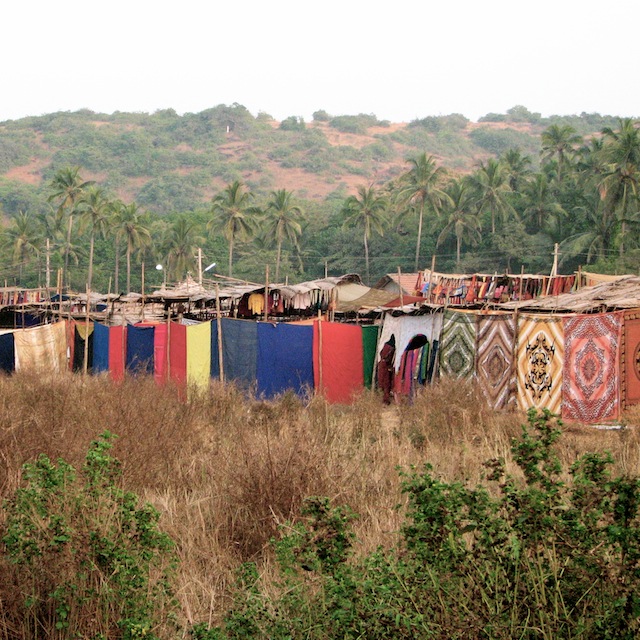
The market springs to life every Wednesday, transforming Anjuna Beach into a maze of stalls. Visitors can expect to find everything from Tibetan silver jewelry and Rajasthani handicrafts to second-hand clothes, hammocks, and aromatic spices. The carpets and tapestries seen in the image are often handmade, with patterns drawing from tribal, Persian, and Indian influences. These colorful facades are not just for show—they shield the stalls behind them, creating shaded alcoves where bartering is a cultural rite.
What makes the Anjuna Market experience unique is not just its goods, but its energy: the rhythm of distant drum circles, the chatter of international accents, and the salty breeze from the nearby sea. Behind the scenes, locals and long-stay expats come together in a blend of commerce, culture, and community.

When you wander into the heart of Goa’s vibrant Anjuna Flea Market, you’ll be greeted by a dazzling display like no other. Stacked high in a riot of color, these richly patterned fabrics evoke the artistic flair of their makers and the free-spirited soul of Anjuna itself.
I captured in this photo a snapshot of textile paradise—vivid hues of purple, crimson, emerald, and cobalt dyed and printed in styles ranging from traditional Indian batik to psychedelic patterns reminiscent of the region’s hippie roots. Many of these fabrics are handcrafted, dyed with natural pigments, and adorned with motifs rooted in Indian mythology or coastal nature.
Textiles there are more than decorative. They reflect Goa’s cross-cultural history—a blend of Indian tradition, Portuguese influence, and global traveler culture. Whether used as sarongs, wall hangings, or custom clothing, these fabrics offer a tactile way to carry a piece of Goa’s creative spirit home.

This photo I captured of two men in a quiet conversation at a textile stall, surrounded by gently swaying scarves and sarongs.
Bathed in the golden Goan light, the scene reflects the market’s grounded charm. One man, dressed in traditional South Asian attire with a checkered lungi and turban, leans slightly on a walking stick. The other browses folded fabrics, focused and unhurried. Around them, textiles in earthy tones and deep reds flutter from ropes and wooden beams.
This isn’t the vibrant chaos that many associate with Anjuna—this is its quieter soul. In these unguarded hours, the market feels more intimate, its commercial buzz replaced by human connection.
The Anjuna Flea Market may be famed for its psychedelic colors and global crowd, but its heart still beats to the rhythm of local life. Here, beneath makeshift canopies and shifting light, tradition and tourism blend in everyday moments that feel timeless.
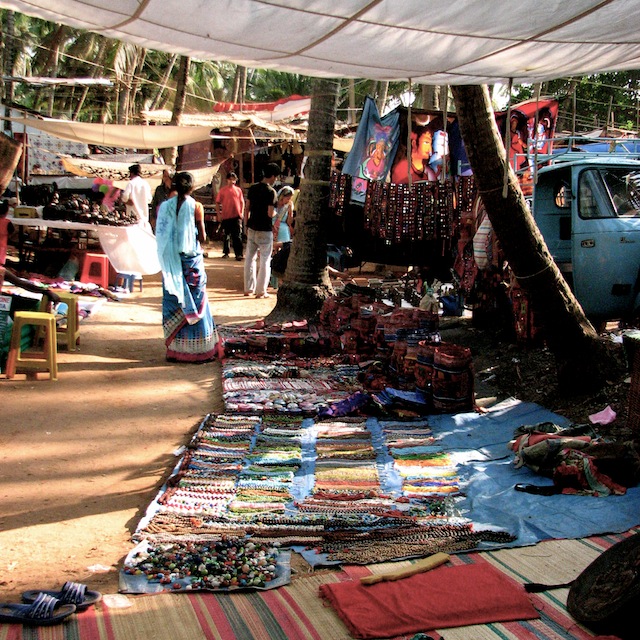
As sunlight filters through makeshift canopies and palm fronds sway above, Anjuna Flea Market reveals its most captivating face—an open-air wonderland bursting with color, creativity, and cultural exchange. This photo I captured in 2006 shows you the bohemian essence of the market: stalls spilling over with beaded jewelry, embroidered textiles, leather goods, and psychedelic wall hangings. Beneath it all, woven mats and patterned blankets define the vibrant path underfoot.
The atmosphere is distinctly Goan—laid-back yet buzzing with life. A woman in a flowing skirt moves gracefully past artisanal crafts and vintage curiosities. In the background, tie-dye tapestries and Bollywood prints flutter in the warm sea breeze. A bright blue van, possibly used for transporting goods or as a seller’s mobile base is a visual reminder of the market’s informal, grassroots charm.
Anjuna Flea Market isn’t just a place to buy things—it’s a cultural mosaic. Here, you’ll meet Rajasthani jewelers, Tibetan stallholders, Nepali fabric traders, and global nomads selling handmade wares. Every item tells a story, whether it’s a hand-stitched bag from Gujarat or a recycled sari necklace crafted just meters from where you stand.
To explore this market is to experience the spirit of Goa: a fusion of tradition, travel, art, and independence. It’s a feast for the senses—and an endless source of inspiration for curious souls.

Goa’s Sunset Bazaar
As the sun begins to dip behind the coconut palms, a golden haze filters through makeshift canopies at the Anjuna Flea Market. The late afternoon light creates an atmospheric glow, casting long shadows across dusty walkways lined with stalls. In this quieter hour, the market takes on a different character—less hurried, more reflective—yet still alive with discovery.
This photo I captured shows a vendor making his way through the narrow aisle, a soft blur of woven fabrics and trinkets glinting in the fading sun. The patchwork roof of tarpaulin and cloth shields both sellers and shoppers from the heat, while the earthy scent of red Goan soil mingles with incense and spice.
A Market Like No Other
The Anjuna Flea Market is a mix of cultures, crafts, and colors. By sunset, its energy softens but the charm only deepens. Stalls brim with hand-carved statues, oxidized jewelry, embroidered textiles, and quirky antiques that whisper stories of faraway places. Musicians and performers often appear as dusk falls, giving the market a festival-like feel.
You’re just as likely to find a handmade leather journal as you are a psychedelic poster from the 1970s. This is a place where time feels slower, where every object has a tale, and where the journey is just as enriching as the souvenirs.

Spices of Goa
Amid the colorful chaos of Anjuna Flea Market, a stall of aromatic spices stands out like a jewel box. This photo captures the essence of India’s culinary heritage—raw turmeric roots, dried cardamom pods, crushed red chili, and a mosaic of fennel, mace, and other vivid spices carefully displayed in open sacks. The fragrance alone draws you in, a heady blend of earthiness, heat, and complexity that is quintessentially Indian.
Goa’s spice story is centuries old, rooted in ancient trade routes and intensified by Portuguese influence. What you’re seeing here is history you can smell. From the humid forests of the Western Ghats to sun-drenched coastal farms, spices have been cultivated, bartered, and celebrated for generations.
The Colorful Pulse of Anjuna
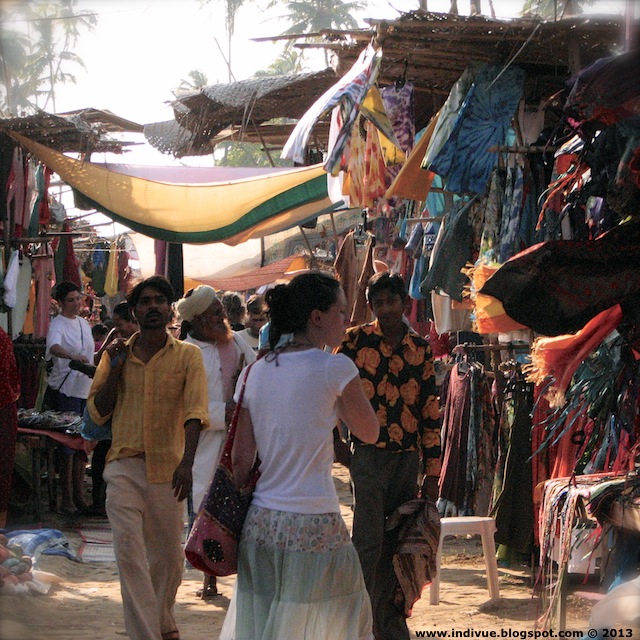
In this photo I captured a quintessential Goan scene: travelers and locals moving through narrow aisles, shaded by vibrant sarongs, scarves, and hammocks that ripple in the breeze.
This market, born in the 1970s as a barter ground for hippies, remains a melting pot of global free-spiritedness. Over the decades, it has transformed into a multicultural bazaar where art, fashion, and tradition coexist in harmony. The stalls, brimming with boho clothing, tie-dye shirts, beach wraps, and handmade accessories, are curated with both Indian soul and international flair.
A Market Where Every Turn Tells a Story
Each vendor has their own story—many are artisans from Rajasthan, Kashmir, or Nepal, while others are wandering travelers selling handmade creations to fund their journeys. You might find yourself chatting over coconut water about silk threads, tribal embroidery, or the meaning of a print that caught your eye.
The vibe is friendly and relaxed, with music wafting from nearby cafés and spontaneous jam sessions adding to the laid-back rhythm of Anjuna life. It’s easy to spend hours here—browsing, bargaining, people-watching, or simply absorbing the atmosphere.

Beyond the Bazaar – The Rural Charm of Anjuna’s Flea Market Outskirts
Step just a few meters beyond the bustling core of the Anjuna Flea Market, and a quieter, pastoral Goa greets you. This photo I took captures a peaceful moment on the market’s periphery: a humble bamboo stall shaded with palm leaves, displaying handmade bags and small garments, while cows rest lazily nearby on sun-bleached grass. A dog snoozes in the background, and simple village houses dot the horizon beneath a sky brushed with tropical blue.
This juxtaposition is part of what makes Anjuna so compelling—the contrast between vibrant market life and the calm, agrarian rhythm of rural Goa. Here, modern travelers mingle with age-old customs, and commerce unfolds at a pace that still honors the land and its animals.
A Glimpse into Goa’s Slower Side
Scenes like this one remind us that the Anjuna Flea Market isn’t confined to its narrow lanes. It spills into open fields, where stall owners set up against a backdrop of coconut groves and village life. The presence of cows, considered sacred in India, underscores the market’s deeply rooted connection to traditional ways of life. It’s not uncommon to see animals freely roaming the area—an everyday part of the local ecosystem.
For visitors, this offers a chance to witness the coexistence of tourism and tradition. You can browse artisanal products with cows at your side, exchange smiles with locals, and see how daily life and commerce intertwine seamlessly in Goa’s unique rhythm.

Rustic Serenity at Anjuna Beach, Goa
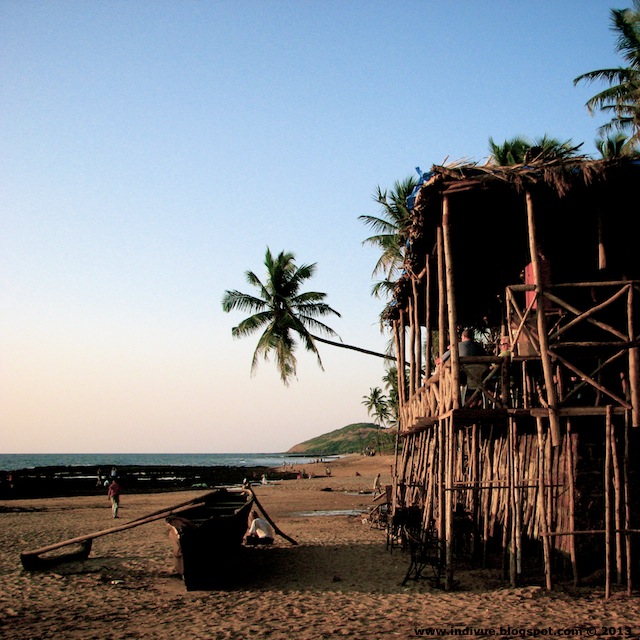
As the sun begins its descent over the Arabian Sea, the golden sands of Anjuna Beach in Goa bask in a warm, amber glow. The scene here is a perfect harmony of nature and laid-back coastal life—tall, gently swaying coconut palms, a rustic wooden beach shack propped up on stilts, and traditional fishing boats pulled onto the shore.
This photograph captures the spirit of Anjuna Beach, one of North Goa’s most iconic coastal destinations. Known for its bohemian charm and a rich legacy from the hippie movement of the 1960s, Anjuna has evolved into a haven for free-spirited travelers, offering a blend of serene beachscapes and vibrant culture.
The wooden structure in the image is a classic Goan beach shack, typically constructed from local materials like bamboo and palm fronds. These shacks often double as restaurants and bars, offering everything from fresh seafood to chilled cocktails, all with a soundtrack of the crashing waves. Most shacks are temporary constructions—built anew each tourist season—giving them a raw, impermanent beauty.
In the background, gentle hills roll into the sea, while the shoreline is dotted with basalt rocks. The beach itself invites a slow-paced day: lounging under a palm, sipping a coconut, or simply watching the tides shift in their eternal rhythm.
Travel Info: Visiting Anjuna Beach
Location: Anjuna Beach, North Goa, India
Getting There:
- From Goa International Airport (Dabolim): Approx. 45 km; taxi or ride-share (1–1.5 hrs).
- By Train: Nearest major station is Thivim, around 19 km away.
- By Bus: Regular local buses run from Mapusa (8 km) and Panaji (18 km).
Entry Fee: Free
Best Time to Visit: November to February for the most pleasant weather
Tips:
- Visit the Wednesday Flea Market, a local legend for quirky finds and global street food.
- Sunsets are magical—grab a spot at a shack with a sea view.
- Keep an eye out for beach parties during the tourist season.
- Arrive early for the best selection and cooler temperatures.
- Bring cash—many stalls don’t accept cards.
- Don’t forget to haggle—bargaining is expected and fun!
- Keep an eye out for live music and local food stalls offering Goan snacks.
Read more:

 INDIVUE - travel & art
Leave a comment