
Kapaleeshwarar Temple is located in the vibrant neighborhood of Mylapore, one of the oldest and most culturally rich areas of Chennai, India. It is a masterpiece of South Indian Dravidian architecture and it is one of those places where your experience stays with you long after the visit.
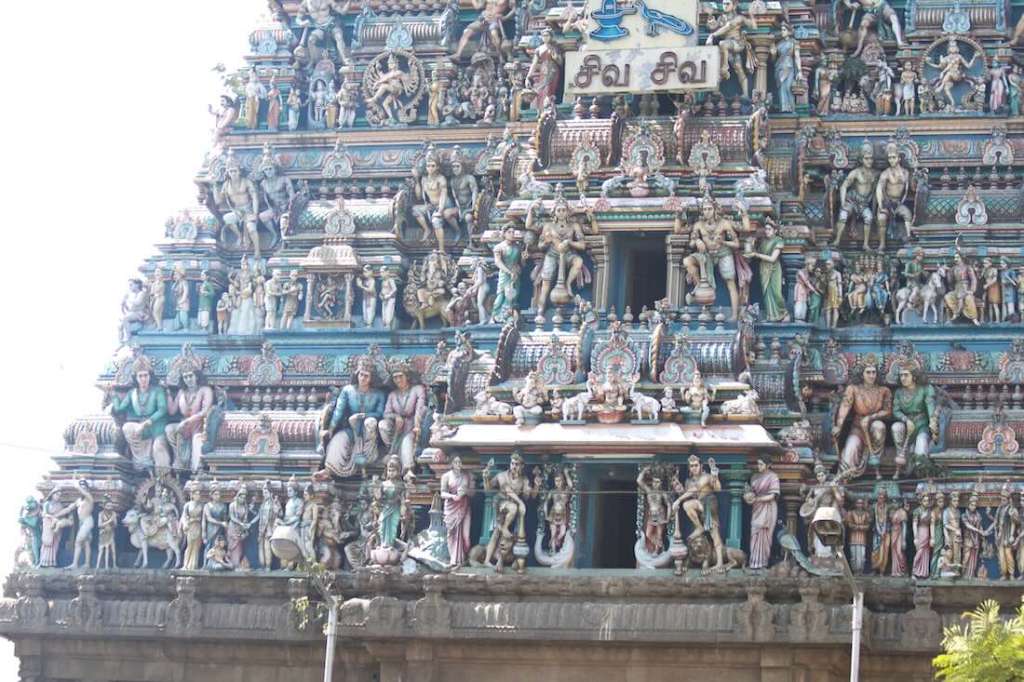
The Kapaleeshwarar temple is dedicated to Lord Shiva, but for many travelers, the first impression is not religious but visual. The colorful gopuram (temple tower) draws your attention immediately. When you start looking closer at it, you will see lots of incredible details – every figure, every layer, every color telling its own story.
I have visited many temples in India, and there is something special about this one. Part of it comes from the surroundings. Mylapore is full of life, and the temple is right in the middle of it all. The streets around the temple are busy and vibrant, filled with flower vendors, small shops, locals, and visitors. Everything is moving, and yet the atmosphere feels balanced somehow. Inside the temple, even if you are not religious, the place feels both calming and intense at the same time.
One of the most interesting aspects of Kapaleeshwarar Temple is its story. According to local legend, Goddess Parvati once worshipped Shiva here in the form of a peacock, and this is believed to be the origin of the name Mylapore. These stories are visible in the temple’s details and symbolism.
A Temple with Deep Historical Roots
The origins of Kapaleeshwarar Temple date back several centuries, with references suggesting that an earlier structure existed near the coastline before being destroyed – possibly during Portuguese rule in the 16th century. The current temple is believed to have been rebuilt inland in Mylapore, which has long been a hub of Tamil culture, religion, and classical arts.
Architectural Highlights
The towering gopuram (gateway tower) rises approximately 37 meters high. It is covered in hundreds of colorful sculptures, and it depicts scenes from Hindu mythology, including deities, sages, and celestial beings.
The structure follows classic Dravidian architectural principles:
- A pyramid-shaped tower with multiple tiers
- Richly ornamented sculptures on every level
- Symmetrical layout leading into the inner sanctum
- Intricate carvings that tell mythological stories
Inside the temple complex, visitors will find pillared halls, shrines dedicated to various deities, and a sacred temple tank that adds to the spiritual atmosphere.
The Temple Experience
The temple is active throughout the day, with rituals, prayers, and offerings taking place continuously.
The surrounding streets of Mylapore are equally fascinating. Just outside the temple, you will find:
- Flower vendors selling jasmine garlands
- Small shops offering religious items and souvenirs
- Traditional South Indian eateries and cafés
- A lively local market atmosphere
Festivals and Cultural Significance
Kapaleeshwarar Temple becomes especially vibrant during festivals, the most famous being the annual Arubathimoovar Festival. During this time, elaborately decorated idols are taken out in grand processions through the streets of Mylapore, accompanied by music, dance, and large crowds of devotees.
The Arubathimoovar Festival at Kapaleeshwarar Temple usually takes place between March and April each year. It is part of the larger Panguni Festival, which follows the Tamil calendar month of Panguni (mid-March to mid-April). The exact dates vary annually based on the lunar calendar.
What happens during the festival?
The highlight is the grand procession of the 63 Nayanmars (saints devoted to Lord Shiva), whose idols are carried through the streets of Mylapore. The area around the temple becomes extremely lively, filled with:
- Traditional music and rituals
- Decorated temple chariots
- Thousands of devotees and visitors
- A festive, almost carnival-like street atmosphere
If you want to experience the festival at its peak, plan your visit around the main procession day, which is usually one of the final days of the celebration.
For a calmer experience with fewer crowds, it’s better to visit the temple outside the festival period.
Respectful photography is essential, especially inside temple premises, where restrictions may apply.
Practical Travel Tips
- Location: Mylapore, central Chennai
- Best time to visit: Early morning or late afternoon
- Dress code: Modest clothing recommended (covered shoulders and knees)
- Footwear: Must be removed before entering
- Entry: Free, but donations are welcome
If you are traveling to Chennai, this is definitely one of the places I would not skip.
Watch and read: Train trip from Goa to Chennai.


Leave a Reply