
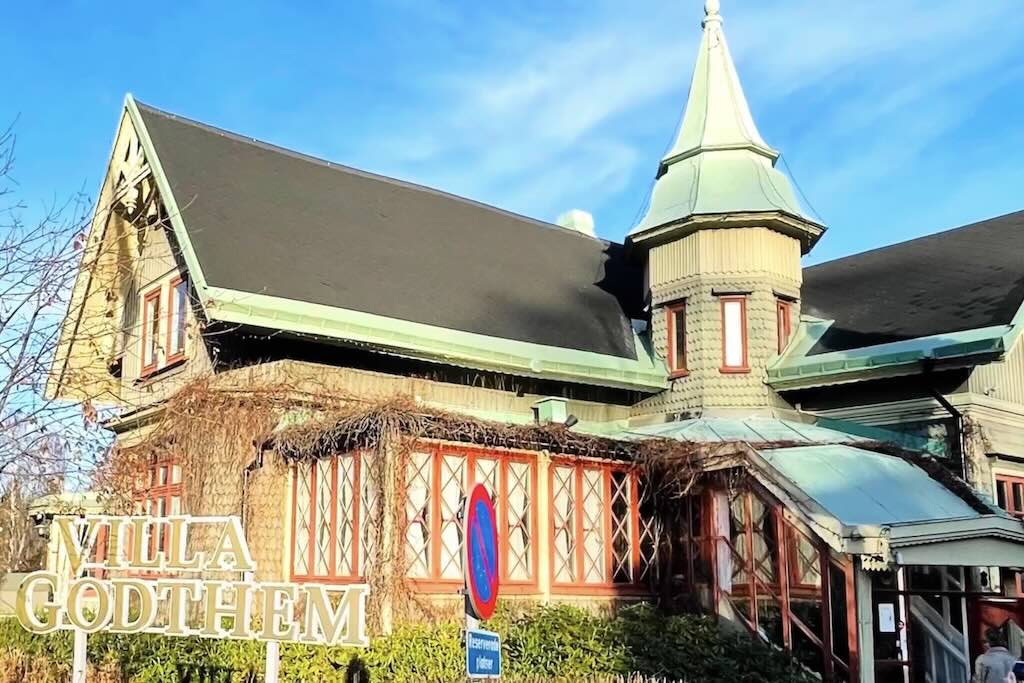
• Villa Godthem – Christmas Atmosphere at a Restaurant in Stockholm | Video

    *pr-trip in 2021 with Visit Stockholm, Silja Line and Viking Line

    The focus of the accompanying video is Villa Godthem, an iconic restaurant located on Djurgården in Stockholm. This historic restaurant sits right by the canal, in an area where nature and the rhythm of the city meet. It is a place that offers both elegant interiors and a classic dining experience, regardless of the season. (villagodthem.se)

    The Christmas atmosphere I captured on video at Villa Godthem highlights the very best of this restaurant: a refined setting, beautifully set tables, excellent food and drinks, and a warm, inviting ambiance that feels particularly special during the Christmas season and throughout the winter months. The combination of a long culinary tradition and modern kitchen expertise makes Villa Godthem a destination well worth visiting in Stockholm.

    Restaurant Villa Godthem in Stockholm

    History and location

    Villa Godthem was built in 1874 and is today one of Stockholm’s most traditional and well-established restaurants. It has operated as a restaurant for more than a century, and its classic villa setting, combined with a lush garden, creates a distinctive atmosphere that adapts beautifully to the Christmas season as well. (visitstockholm.com)


    Opening hours

    The restaurant is open year-round and continues to operate as both a lunch and dinner restaurant. It offers a diverse à la carte menu alongside seasonal specialties, making it suitable for both casual visits and more festive dining occasions.


    Atmosphere and interior design

    I filmed the restaurant’s Christmas ambiance during a press trip in 2021, and this video conveys it particularly well. Beautifully decorated tables with crisp white tablecloths, elegant interiors, and warm lighting create an intimate yet festive atmosphere. Villa Godthem is known for combining traditional Scandinavian design with a timeless, elegant aesthetic.

    The interior features classic details and tall windows that allow guests to enjoy views of the surrounding scenery and outdoor areas. The overall feeling is cozy yet refined, making it an ideal setting for a romantic dinner as well as for celebrating Christmas with family or friends.


    Food and drink selection

    The food shown in the video — soft bread rolls served with butter and a delicious Toast Skagen — is an excellent example of the restaurant’s Scandinavian cuisine. Toast Skagen is a classic Swedish starter made with shrimp, mayonnaise, and dill, served on crispy toasted bread, and it remains a firm favorite among many visitors.

    In addition to this, the menu includes a variety of traditional Swedish dishes prepared with seasonal ingredients. Villa Godthem also offers a comprehensive selection of alcoholic beverages, particularly wines and seasonal drink pairings, which complement the food and enhance the overall dining experience.


  • Sometimes I find myself pausing and asking an uncomfortable question. After twenty years of blogging and eighteen years of producing videos for YouTube, have I actually lived the life I intended to live, or have I spent an excessive part of it simply waiting for technology to function?

    Waiting for applications to open.

    Waiting for videos to upload.

    Waiting for failed downloads to restart, again and again.

    Waiting for plugins to update, break, and then require fixing once more.

    What was once supposed to be a set of tools designed to support creativity has, over time, become a constant source of friction. The internet promised efficiency, reach, and freedom. In reality, it often delivers interruptions, error messages, incompatibilities, and endless troubleshooting. Hours disappear not into writing, filming, or creating, but into problem-solving issues that should not exist at all after decades of technological development.

    There is a particular exhaustion that comes from technical repetition. The same problems reappear year after year, platform after platform. Uploads fail without explanation. Interfaces change overnight. Features disappear. Algorithms shift silently. Documentation is outdated before it is even read. And the responsibility to adapt always falls on the creator, never on the platform.

    This raises a deeper concern about trust.

    If something as basic as a social media platform cannot consistently perform its core functions, even after years of refinement, how are we supposed to place greater parts of our lives into the hands of increasingly complex systems? We are told that artificial intelligence will streamline work, optimize creativity, and remove friction. Yet the foundational digital infrastructure we already depend on still struggles with reliability.

    Trust is built on predictability.

    Creativity requires stability.

    Life needs systems that support it rather than constantly demanding attention.

    When technology fails, it does not fail quietly. It demands time, focus, emotional energy, and patience. It fragments concentration and subtly reshapes how days are spent. Over long periods, this accumulation becomes significant. A life measured not only in projects completed, but in hours lost to loading bars and error notifications.

    This is not a rejection of technology itself. Blogging and video creation have enabled meaningful expression, connection, and documentation. They have allowed stories to travel across borders and years. But there is a growing realization that the cost of participation is often hidden. The cost is mental bandwidth. The cost is time. The cost is presence.

    As artificial intelligence becomes more deeply integrated into creative and professional life, the question is no longer whether it is powerful, but whether it is trustworthy. Not in theory, but in practice. Not in marketing language, but in everyday use. Can it reduce friction rather than introduce new layers of dependency? Can it truly serve human intent, or will it simply become another system that requires constant supervision?

    Perhaps the most honest conclusion is this. Technology should remain a tool, not a life environment. When creators spend more time maintaining systems than expressing ideas, something has gone wrong. Progress should feel like release, not like an endless queue of updates and fixes.

    After decades online, the longing is simple. Fewer platforms. Fewer failures. More time actually living, observing, and creating. Because no amount of innovation can replace the value of a life that is not perpetually waiting for something to load.