
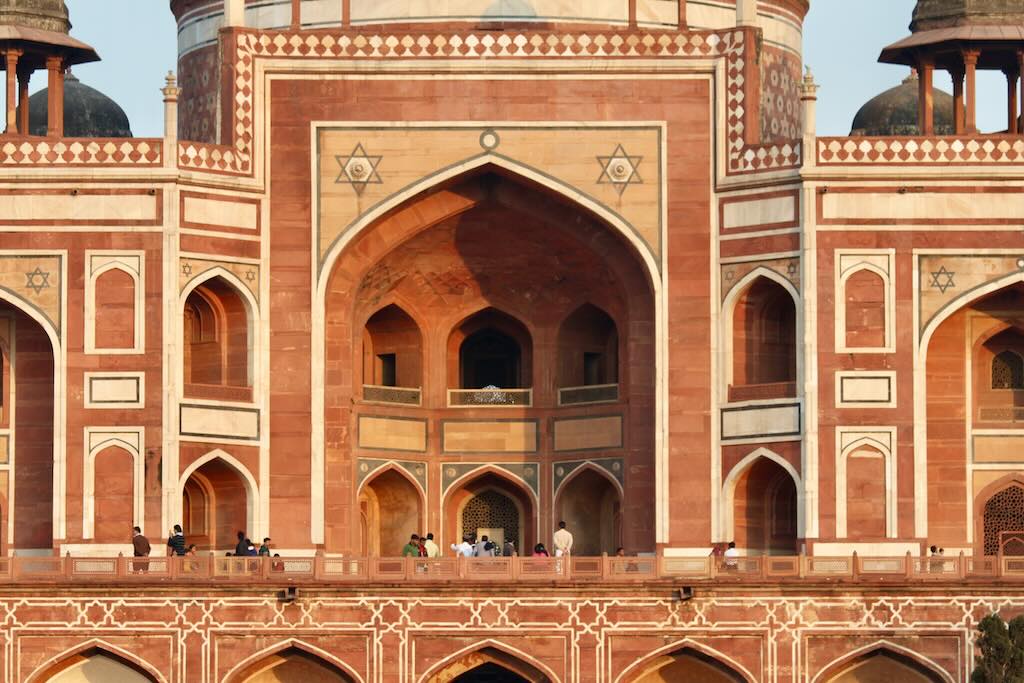
• Sightseeing Delhi: Humayun’s Tomb with sunset

    This video takes you to Humayun’s Tomb in New Delhi, India. The video of this famous sightseeing place in New Delhi was filmed ten years ago in January, which is why the sunset looks beautiful and you will see no pollution.

    In this video you will get to see Humayun’s Tomb 1565-72 a.d. and Bu Halima Enclosure from 16th century. It is said that “Hamida Banu Begum, Humayun’s grieving widow, built Emperor Humayun’s mausoleum. Precursor to the Taj Mahal, it stands on a platform of 12000m2 and reaches a height of 47m2. The earliest example of Persian influence in Indian architecture, the tomb has within it over 100 graves, earning it the name ‘Dormitory of the Mughals. Built of rubble masonry, the structure is the first to use red sandstone and white marble in such great quantities. The small canopies of the terrace were originally covered in glazed blue tiles.”

    Video duration 2:31

    Humayun’s Tomb, New Delhi

    Facts of Humayun’s Tomb

    The Humayun’s Tomb is one of the best sights in New Delhi, India.

    It is an extraordinary monument of immense historical and architectural significance. Built in the 16th century, this mausoleum is one of the most splendid examples of the Mughal architectural legacy and is often regarded as a precursor to the Taj Mahal.

    Historical Context

    • Commission and Completion: The tomb was commissioned by Humayun’s first wife, Empress Bega Begum (also known as Haji Begum), in 1569-70, and it was completed in 1572.
    • Architectural Influence: The tomb’s design was conceived by the Persian architect Mirak Mirza Ghiyas, who introduced Persian architecture to India, setting a precedent for future Mughal architecture.

    Architectural Highlights

    • Design Elements: The structure is notable for its symmetry, the octagonal shape of the central tomb chamber, and the use of red sandstone and white marble.
    • Garden Layout: The tomb is set in the center of a large, quadrilateral Charbagh (a Persian-style garden divided into four parts), a feature that became characteristic of Mughal garden-tombs.
    • Innovations: The double-dome structure and the high plinth are architectural innovations that were later seen in many Mughal buildings.

    Cultural and Artistic Significance

    • UNESCO World Heritage Site: Humayun’s Tomb was declared a UNESCO World Heritage Site in 1993, recognizing its outstanding universal value.
    • Influence on Later Monuments: The tomb is considered a significant architectural milestone in the development of the Mughal style, influencing major architectural innovations in the subcontinent.

    Conservation and Restoration

    • Preservation Efforts: Over the years, the tomb has undergone several restoration and conservation projects to preserve its original magnificence.
    • Collaborative Work: These efforts often involve collaborations between the Archaeological Survey of India, various international organizations, and government bodies.

    Tourism and Educational Value

    • Visitor Experience: The site is a major tourist attraction in Delhi, offering a rich educational experience in Mughal history and architecture.
    • Accessibility: It is easily accessible, located near other historical sites in Delhi, and provides an enriching cultural experience for visitors.

    Surrounding Monuments

    • Additional Structures: The complex also houses several other graves, including those of other members of the Mughal royal family and a mosque.
    • Isa Khan’s Tomb: Adjacent to the main tomb, the complex includes the tomb of Isa Khan Niyazi, an Afghan noble, which predates Humayun’s Tomb and is itself an exquisite example of Lodi-era architecture.

    See also what Humayun’s Tomb looks like from far

    If you liked my video of Human’s Tomb in Delhi, consider subscribing and watching also other videos in my YouTube channel, so that I can make more videos!

    Tourists by the Humayun’s Tomb

    Read also my updated travel guide INDIVUE – Trip to India of which this video is also a part of!

    Other useful links:

  • Hotel from where you can see Taj Mahal in India

    Many people dream to see the Taj Mahal in India and I can say that the experience is really all that worth it. Taj Mahal is called one of the seven wonders of the world for a reason. Check out the video I made!

    When you have effortlessly saved your travel money and finally head towards Agra, India and the Taj Mahal, your next question would be what is the best time of the day to see Taj Mahal. Ideal situation would be if you could see the Taj Mahal in the morning, day, evening and also in the night in the moonlight. Most of the time, however, that just isn’t possible for a common tourist.

    One solution to this could be to choose a hotel from where you can see the Taj Mahal from your hotel room. I tried this a few years ago and based on that, if your schedule is tight, I would really recommend such a hotel with a view of the Taj Mahal. Taj Mahal is especially captivating at sunrise and sunset, so if you plan to visit there during midday, the sunset view of the Taj Mahal as seen from the hotel terrace could provide a better overall experience of your trip to Agra and the Taj Mahal.

    My hotel was called Taj Plaza, which was an ok three star hotel in Agra. The interior of the hotel was not pristine, but not broken either. The hotel had rooms with direct views of the Taj Mahal Mausoleum, and the rooftop terrace was a nice place to watch the sun setting and rising, making the Taj Mahal’s domed ceiling glitter in different shades of white. In the hotel’s roof terrace you could also enjoy a restaurant dinner while listening to local street life. Early in the morning, as the sun was rising, I was able to listen amazing birds singing outside, and the prayer invitations to the mosques also echoed around everywhere.

    In winter time, air conditioning is not necessary in Agra, but for summer times, AC was found in the rooms at Taj Plaza. There was no heating in the rooms during the winter, but thick woolen blankets ensured that you could sleep at night without freezing.

    The hotel room was decorated with bright red wallpaper patterned with golden yellow ornaments. The sofa was burgundy velvet and the dark green coffee table decorated with ornaments of different colors was perhaps the most beautiful element of the apartment.

    You can see the room decoration in the hotel Taj Plaza in addition to the lovely Taj Mahal views in the video I made, so enjoy –

    Views of Taj Mahal from a hotel

    Unveiling the Charm of Hotels in Agra

    Nestled on the banks of the Yamuna River, Agra is a city that evokes awe and wonderment through its splendid historical legacy, most notably the iconic Taj Mahal. Agra offers an array of luxurious hotels that seamlessly blend opulence with heritage. Agra’s hotels are a gateway to experiencing the city’s history, architecture and hospitality. Whether you’re seeking a room with a Taj Mahal view or wish to immerse yourself in the regal charm of the Mughal era, Agra’s luxury hotels offer an unmatched blend of modern comfort and timeless heritage. From lavish accommodations to gourmet experiences, these hotels redefine luxury and ensure that every stay in Agra is nothing short of extraordinary. So, if you’re planning a visit to this enchanting city, be prepared to be captivated by the allure of Agra’s luxury hotels.

    1. A Tale of Splendor: The Taj Mahal View Hotels Agra’s crowning jewel, the Taj Mahal, stands as an epitome of love and architectural brilliance. For those seeking an immersive experience, hotels offering Taj Mahal views are the epitome of indulgence. Imagine waking up to the majestic silhouette of the Taj Mahal as the sun’s first rays touch its marble facade. These hotels not only offer plush accommodations but also ensure that guests can relish the Taj Mahal’s changing hues from the comfort of their rooms or terraces.

    2. Luxurious Retreats: Heritage-Inspired Ambiance Agra’s history is etched in its forts, palaces, and Mughal architecture. Many hotels in the city exude the same regal charm, recreating the ambience of the Mughal era. Lavish courtyards, intricate frescoes, and ornate interiors transport guests to a bygone era, where they can experience the opulence and grace of the Mughal dynasties. Such hotels offer an immersive blend of modern comfort and traditional aesthetics.

    3. Epicurean Delights: Culinary Extravaganza Agra’s culinary scene mirrors its diverse cultural heritage. Hotels in the city take pride in offering an eclectic range of dining options, from Mughlai delicacies to global cuisines. Guests can indulge in fine dining experiences that celebrate the rich culinary heritage of the region, as well as savor international flavors prepared by expert chefs. The fusion of local and global culinary influences ensures an unforgettable gastronomic journey.

    4. Royal Treatment: Impeccable Hospitality The heart of any luxury hotel experience lies in its hospitality. In Agra, hotels take this to heart, offering personalized services that make guests feel like royalty. From warm welcomes adorned with traditional ceremonies to attentive staff catering to every need, these hotels excel in creating an atmosphere of pampering and comfort.

    5. Beyond Luxury: Responsible Tourism and Sustainability As global consciousness about responsible tourism grows, Agra’s luxury hotels are stepping up to contribute positively to the environment and the local community. Many hotels are adopting sustainable practices, such as reducing waste, conserving water, and supporting local artisans. By integrating responsible tourism into their ons, these hotels offer guests the chance to enjoy opulence while making a positive impact.

    But don’t forget – it is possible to see Taj Mahal from the balcony without staying in a luxury hotel as well.

    Useful links:

    Find more of my videos from INDIVUE YouTube channel and follow me up!